
今日のクリエイティブツールがしていないことでLollyが行っていること、そしてLollyが意図的にそれらのツールに委ねていること。
ツールごとの詳細比較(Canva、Adobe、Figma、レンダリングAPI、オンラインコンバーターについてそれぞれ1ページ)は、Lolly compared, tool by toolを参照してください。各ページには、他のツールが優れている点とLollyが代わりに行っていることが記載されています。
ステータス: Lollyはリリース済みです。バージョン1.0は2026年8月30日にオープンソースとして公開されました。セキュリティはまだ独立した監査を受けておらず、導入に関する証拠も数か月前のものです。Adoption & Governanceページで現状を扱っています。
今日のツール
以下の各リングは、ある製品クラスが現時点で出荷されている状態として(宣伝上ではなく)ある機能をどれだけ完全に提供しているかを採点したもので、各クラスはその最良の代表例で採点されています。Lollyも同じ物差しで採点されており、成熟度の1点だけで盤面唯一の赤いリングを取っています。行名を開くと、その採点の根拠がわかります。列は上部のOverall completeness行(採点対象行の平均、spend行は除く)でソートされています。
Lolly includes lolly.work, the same project's separately deployed organisation service. Local creation needs no account; shared work and server rendering use the configured instance. Competitor scores: August 2026. Lolly coverage: 28 September 2026.
| Capability | Lolly+ lolly.work | Penpotopen design | CanvaAffinity Cavalry |
Adobedesktop pro | Brand DAMFrontify Bynder |
Cloudinarymedia pipeline | Figmaonline pro | Render APIsBannerbear Placid Creatomate |
|---|---|---|---|---|---|---|---|---|
| Overall completenessunweighted mean - weight rows for your own context · columns are sorted by this row | 84 | 70 | 57 | 48 | 41 | 41 | 41 | 34 |
Production maturity & track recordCanva, Adobe, Figma, Bynder/Frontify: a decade-plus at massive scale. Render APIs: years in production pipelines. Penpot: shipping, large community, younger at enterprise scale. Lolly: version 1.0 public since 30 August 2026 under MPL-2.0, and SUSE runs it as an internal deployment; no usage data is shared yet and there are no public case studies yet. Cloudinary: 2012, enterprise media infrastructure at global scale. |
25 | 75 | 100 | 100 | 100 | 100 | 100 | 75 |
Mass generation from data (CSV / API)Lolly: batch grid and CLI, plus lolly.work's recoverable server jobs and batches with retries, cancellation and retained outputs. Canva: Bulk Create + Autofill API - real, but Enterprise-gated, async, text/image fields only; Affinity Publisher adds desktop data merge. Adobe: InDesign data merge and scripting. Figma: Buzz fills templates from CSV or XLSX, free in beta (Aug 2026) - cloud- and account-gated, 50. Penpot: open API/MCP, not purpose-built. Render APIs: this is their entire product - account- and cloud-gated, so 75 under the method rule. DAM: Studio-style batch create and resize. Cloudinary: URL-driven overlays and named transforms derive variants at scale - account-gated, 75. |
100 | 50 | 50 | 50 | 75 | 75 | 50 | 75 |
Offline & air-gap operationLolly: standalone creation works offline once its assets are available; lolly.work's organisation services need a reachable instance, which can run on an internal network. The Canva column is scored on its best family member: Affinity (free since Oct 2025) runs offline as a desktop suite once a verified account activates it - 75, the same deduction Adobe takes. Canva's own Offline (2026) still edits pre-synced designs only, per device, in a 14-day window. Adobe: desktop apps run offline; licensing phones home. Figma: cached-file viewing and limited editing. Penpot: self-host on your infra behind a firewall (server required). Cloud APIs and DAM: none. |
100 | 75 | 75 | 75 | 0 | 0 | 25 | 0 |
On-device rendering - data never leavesLolly: local rendering and conversion in-browser or CLI need no upload. Choosing lolly.work's shared storage, work collabs or server rendering sends the relevant data to the configured instance. Adobe: local desktop rendering, but cloud services and telemetry in the suite. Figma: canvas renders locally, files live in Figma's cloud. Penpot: 90 - rendering happens in the browser and the save target is a server that can be your own sovereign private cloud, even your own laptop, with private export throughout; only the server hop separates it from Lolly. Canva itself is server-side by design; the column's 75 is Affinity - local desktop rendering, account activation and telemetry, the same shape as Adobe. Render APIs, DAM: server-side by design. |
100 | 90 | 75 | 75 | 0 | 0 | 25 | 0 |
Hard brand constraints (structural)Lolly: templates fix layout rules and expose permitted inputs. lolly.work adds group access, input policies, shared catalogues, approvals and audit records. Copy and usage rights can still need review. Canva: element locks - permission-based, admin-set and static: no template logic such as conditional logo switching or responsive recomposition at fill time, and Canva AI does not yet respect Brand Controls - 50. Render APIs: templates are fixed (only declared fields vary) but no governance layer. DAM: locked templates with restrictions. Figma: Buzz templates hold locked guidelines at fill time; the design surface stays review-enforced - 50. Penpot: tokens and systems enforced by review, not runtime. Adobe: libraries, little enforcement. Cloudinary: presets and Enterprise-gated transformation templates fix operations, not brand layout - 50. |
100 | 50 | 50 | 25 | 75 | 50 | 50 | 75 |
C2PA provenance, signed at creationAdobe: the broadest shipped implementation (Photoshop, Lightroom, Premiere, Firefly) - signing happens locally in the desktop apps and in the cloud for the Content Authenticity web app, and nothing signs without an Adobe account and an Adobe-provisioned identity, so it is account-gated end to end: 75 under the method rule. Lolly: optional on-device signing without an account, plus lolly.work server signing with a configured organisation identity. A verifier must trust the signer's root to show a trusted identity. Version 1.0 is public and SUSE runs it internally, but no usage data is shared yet, so 75. Penpot: 50 via the official Lolly Export plugin - the same on-device engine signing Lolly uses, opt-in, as in Lolly (and disclosed plainly: it is Lolly's own plugin). No evidence of C2PA writing in Canva, Figma, render APIs or DAM as of Aug 2026. Cloudinary: 50 - signs images on delivery (fl_c2pa, CAI member since 2020), attesting delivery by Cloudinary rather than creation by you. |
75 | 50 | 0 | 75 | 0 | 50 | 0 | 0 |
CLI, pipeline & AI-agent automationLolly: CLI, TUI, MCP server and URL mode, plus lolly.work's authenticated render API, recoverable batches and governed delivery. One engine across the local and server paths. Render APIs: API-first, webhooks, integrations - account- and cloud-gated, so 75 under the method rule. Penpot: open API, plugins, official MCP server. Canva: Connect API - Enterprise-gated, async, rate-limited. Adobe: UXP/ExtendScript plus Firefly APIs. Figma: strong REST/plugin API, no render pipeline. DAM: asset-management APIs. Cloudinary: API-first media pipeline - account-gated, 75. |
100 | 75 | 50 | 50 | 50 | 75 | 50 | 75 |
Live collaboration (real-time co-editing)Figma: the scale benchmark - 200 simultaneous editors, up to 500 people in a file - account and cloud required. Canva: mature real-time editing across the product, same precondition. Penpot: real-time multiplayer with live cursors; self-hosting lifts the vendor-account precondition, but a server is still required. Lolly: direct two-device private collabs without an account, plus authenticated work collabs through lolly.work with shared edits, cursors and saved team sessions. Partial reflects the current single-node work deployment and limited operating history. Private collabs work without internet on a shared network; work collabs need the organisation's instance. Adobe: Live Co-Editing in beta, cloud documents only. Render APIs: no editing surface. DAM: comments and approvals, not canvas co-editing. Cloudinary: DAM comments and workflows, no canvas co-editing. |
50 | 75 | 75 | 25 | 25 | 25 | 75 | 0 |
No design skill requiredCanva: the category benchmark for ease. DAM: fill a locked template. Lolly: fill in fields using an existing tool, or publish a tool from Design through Share with rules. lolly.work manages access and input policy for the team. Render APIs: swaps design skill for developer skill. Adobe, Figma, Penpot: professional tools. Cloudinary: the media library is easy; transformations are developer territory. |
100 | 25 | 100 | 25 | 100 | 50 | 25 | 50 |
Open source, self-hosted, no lock-inPenpot: MPL-licensed, 51k+ stars, self-host via Docker/K8s - fully verifiable today. Lolly and lolly.work: MPL-2.0 open source in separate repositories, both self-hostable. lolly.work provides the organisation services as part of the project. The current 75 reflects the young project and limited deployment history. Everything else is proprietary SaaS or proprietary desktop. |
75 | 100 | 0 | 0 | 0 | 0 | 0 | 0 |
Cost at production scaleLolly + lolly.work and Penpot: no per-seat software licence charge for the open-source self-hosted path; hardware, storage and operations remain costs. Render APIs: metered - roughly $0.005–0.049 per image, credits often expiring monthly. Canva/Figma: per-seat; Canva's automation needs Enterprise, though Affinity itself is free since Oct 2025. Adobe: premium per-seat suite. DAM: sales-led enterprise quotes, MAU or seat models. Cloudinary: credit-metered across transforms, storage and bandwidth - 25. |
100 | 100 | 50 | 25 | 25 | 25 | 50 | 25 |
Annual medium enterprise spendIndicative list-price arithmetic for a medium enterprise - think 500-5000 people - August 2026: a guess range, not a quote; deals vary and the seat mix dominates. Ring = how much of the board's largest annual spend (US$500k) you keep; the number in the ring is each range's upper bound. Canva (US$75k-400k; Affinity free since Oct 2025 pulls the design-seat share down), Adobe (US$100k-500k) and Figma (US$30k-250k) assume the realistic creative-seat share of an organisation this size - tens to hundreds of seats, not a licence for every employee. Render APIs price by usage (US$5k-60k). DAM is quote-only, commonly US$50k-250k and up. Penpot is hand-set at 99: "your server" can be your own laptop - a small technical hurdle at well under 1% of an Adobe-scale spend. Lolly + lolly.work: US$0 in software licence charges for self-hosting. The figure excludes devices, organisation hosting, storage, support and administration; these need a separate budget. Standalone Lolly does not need the organisation service. Cloudinary: US$30k-150k, credit-based; enterprise contracts commonly sit near US$82k. |
$0 | $0 | $400k | $500k | $250k+ | $150k | $250k | $60k |
現在のクリエイティブツール群における機能の充実度、2026年8月調査。スコアリング:0=なし、25=回避策レベル、50=実装済みだが制限付きまたは部分的、75=注意点付きで強力、100=中核機能。
signed by Lollypositioning-comparison.htmlHTMLpixels, not shapes40 KBAI generatedgenerated by GPT-6自分で確認する署名済みファイルを取得採点上の注記。 提供されている機能と本番での成熟度は別の問題です。Lollyの成熟度の採点は、2026年8月の最初の一般公開であり、独立したセキュリティ監査がまだないことを反映しています。SSO、承認、サーバーレンダリングがあることは、本番での実績を示すものではありません。以下の機能説明にはlolly.workが含まれ、競合の採点は日付の付いた8月のレビューのままです。
Canvaは行ごとに最良のファミリーメンバーで採点されています。Affinity(2025年10月に無償提供開始)とCavalryの両方を所有しているためです。オフラインおよびオンデバイスレンダリングはAffinity経由で75点です - デスクトップスイートですが、検証済みアカウントが依然必要でテレメトリを含みます。これはAdobeも同様に減点される理由です。一方、Canva自体のオフラインモードは事前同期済みのデザインのみを、単一デバイスで、限られた期間だけ編集できます。Autofillは50点です。実在はしますがEnterprise限定で、非同期、テキストと画像のみです。FigmaのMass generationはBuzzがスプレッドシート入力機能を出荷したこと(無料ベータ、2026年8月)で25点から50点に上昇しました。
盤面を支配するルールは一つです。あなたのコンテンツやアイデンティティに関わる行でのFull(100点)は、アカウント不要かつクラウド前提条件なしで使える機能が必要です。製品自体を説明する行(成熟度、使いやすさ)はこの対象外です。これはprovenanceでAdobeにコストを負わせます。出荷済みのC2PAとして最も広範なもの(Photoshop、Lightroom、Premiere、Firefly)はローカルとクラウドの両方で署名しますが、Adobeアカウントとアイデンティティなしには決して署名できないため、75点です。同じ理由でrender APIsのmass generationとautomationも頭打ちになっています。
Lollyのprovenance 75点は、オンデバイスかつオフラインの署名を反映しています。アーキテクチャとしてはより堅牢ですが未監査であり、アイデンティティまたは組織自身のCAが保証しない限り、デバイスキーは標準のバリデータでは未検証として扱われます。Penpotの50点は、公式のLolly Exportプラグインを通じて得られています。同じエンジンによる署名で、オプトインであり、Lolly自身のものとして開示されています。Penpotはまた、盤面唯一のスケール外リング、オンデバイスレンダリングで90点も獲得しています - ブラウザキャンバス、自分自身のソブリンなクラウド(ラップトップですら)への保存、非公開のエクスポート。サーバーへのホップだけがLollyとの違いです。Cloudinaryは独自の列を持ちます。メディアパイプライン(DAM、変換API、CDN)であり、C2PAを出荷している唯一のクラウド列です(50点。fl_c2paは配信時に署名し、あなたが作成したことではなくCloudinaryが配信したことを証明するためです)。
Live collaborationは逆方向に振れます。Figmaがスケールのベンチマーク(200人の編集者)を設定し、LollyのペアワイズでエアギャップされたピアツーピアはPartialです。Priceは推測であり、そう明記されています。実勢のシート構成に対するリスト価格の算術であり、意図的に幅を持たせています。調達のためではなくスケール比較のためです。Render APIsはconstraintsで75点です。テンプレートは固定されており、ブランドガバナンス層がありません。
ギャップはここです。今日出荷されているもので、constraints-firstかつオフラインで、アカウント不要、レンダリング経路にサーバーもない、というものは存在せず、誰もアカウント条項をコピーしていません。Lollyは今、独自のオープンキャンバスを出荷しています - Design、直接操作型の自由なキャンバスです - ただし、その上の色、タイプ、アセットもブランドのグローバル設定に準拠しており、自由な配置であってもconstraints-firstであり続けます。
Lollyが今もそうではないものは、制約のないデザインスイートです。デザイナーは今後もIllustratorやFigmaでオーダーメイドの制作を続けるでしょう - そして、その作業がガバナンスの効いた再現可能なアセットになる必要が出てきたとき、DesignツールのImport a designが、完成したFigma、Penpot、Illustrator、InDesign、またはPDFファイルを、編集可能でブランドに準拠したボックスとしてキャンバスに取り込みます。
 signed by Lollyvector SVG71 paths~2.7k nodes59 groups75 KB自分で確認する署名済みファイルを取得
 signed by Lollyvector SVG64 paths~2.7k nodes59 groups74 KB自分で確認する署名済みファイルを取得


用途
- 運用化されたクリエイティブアセット(イベントタイル、バッジ、署名、アラート)の迅速な生成
- 色、タイプ、アイコン、画像といった要素がブランドのグローバル設定に準拠していなければならない場合の、オープンキャンバス(Design)での自由な配置
- 完成したFigma、Penpot、Illustrator、InDesign、PDFデザイン(Designツールの Import a design)を取り込み、Lollyのあらゆる形式で決定論的に編集・ガバナンス・再レンダリングできるようにする
- 「3つの項目を埋めて完成したアセットを得る」という一対多のフロー -
/proのバッチグリッドでスプレッドシート/CSVから一括実行する場合も含む(行を貼り付けまたはインポートし、行ごとに1つの完成アセットをzipでダウンロード) - 常時稼働の、繰り返し発生するブランド化された出力
- 表現の自由度よりもブランド表現の一元管理が重要な場面
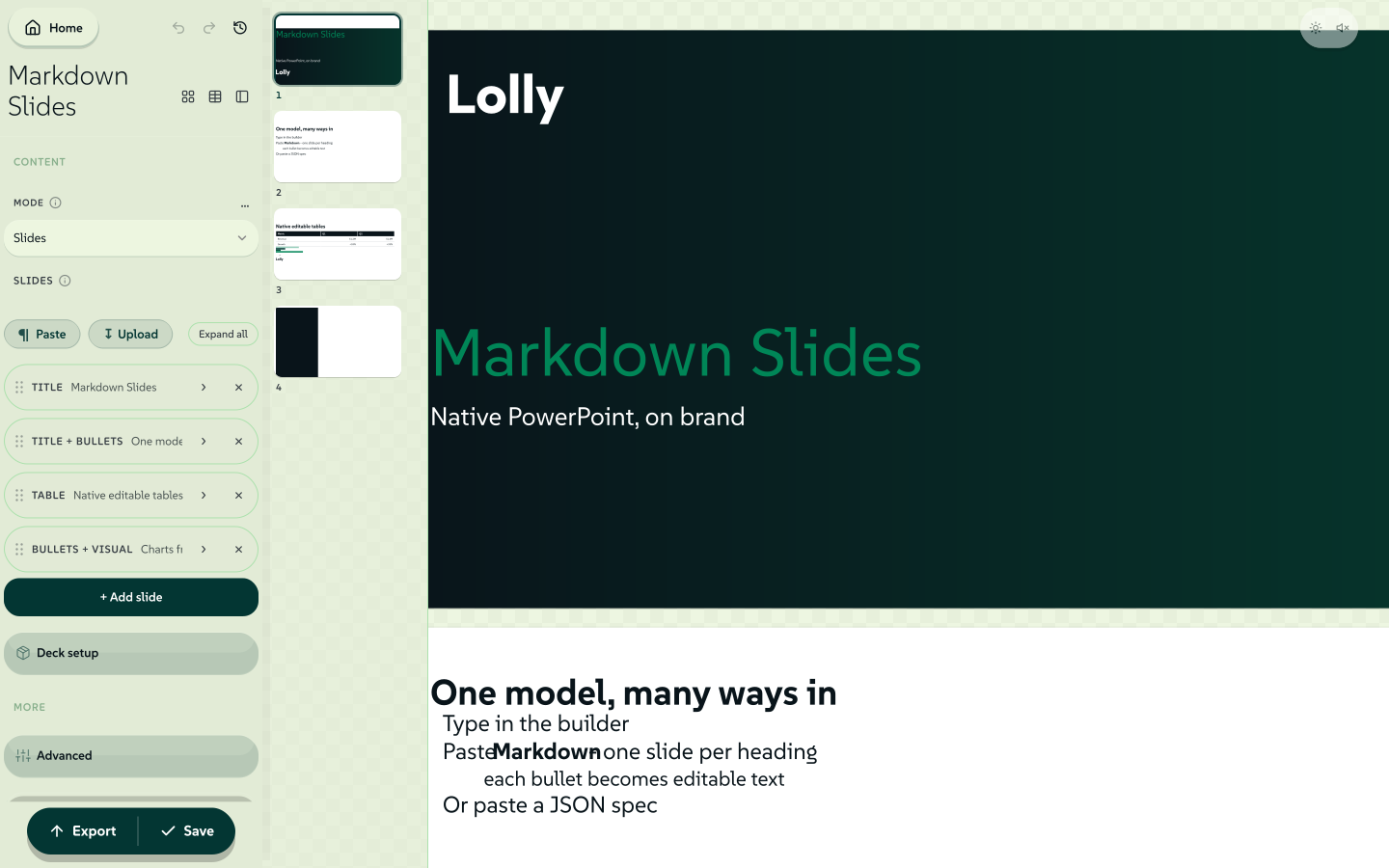
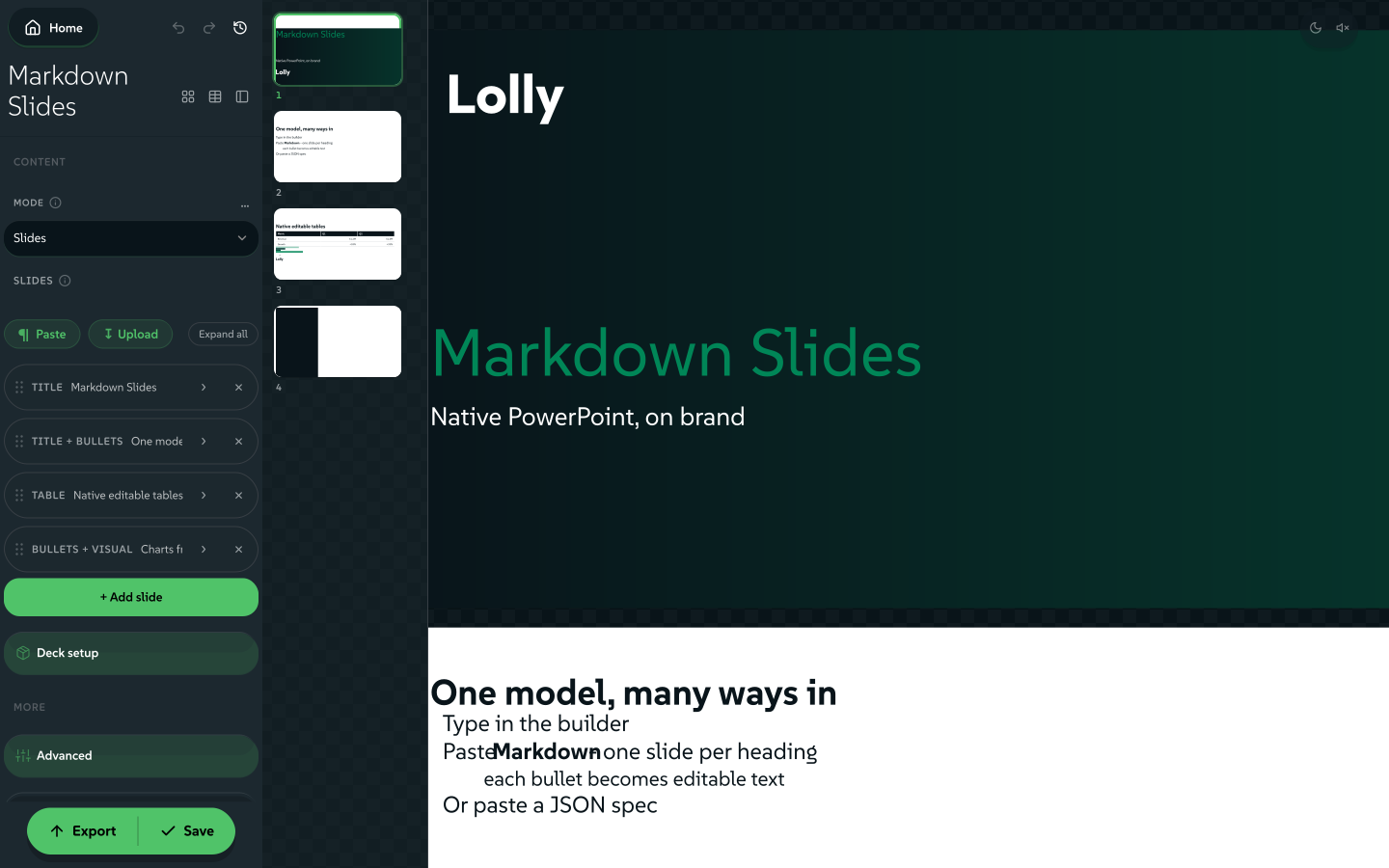
Deck Studioは、ここでの天井を測るのに良い指標です。データとして宣言されたスライドデッキ全体が、キャンバス上でライブにレイアウトされ、ネイティブで編集可能なPowerPointとしてエクスポートされます。
 signed by Lollyvector SVG135 paths~17k nodes252 groups1 image226 KB自分で確認する署名済みファイルを取得
 signed by Lollyvector SVG128 paths~17k nodes252 groups1 image225 KB自分で確認する署名済みファイルを取得


使うべきではない場面
- オーダーメイドやフラッグシップのヒーローコンテンツ(ビルボード、大型動画)
- 本当にデザイナーを必要とする独自のキャンペーン制作
- ブランドシステムを完全に離れる必要があるアイデーション - Lollyのオープンキャンバスも依然として色、タイプ、アセットをブランドのグローバル設定に準拠させます。それこそが要点です
確率的に革新し、決定論的にスケールする
多くの「AIクリエイティブ」の売り込みは、モデルを古い境界線の間違った側に置いています。写字生や装飾写本の彩飾師たちは、その境界線がどこにあるかをすでに定めていました。ラフスケッチでは自由に作業し、何を試してもよく、何も確定されません。それから印刷機に向かいます。印刷機が威圧的に感じられるのは、まさにそれが確定するものだからです。芸術が宿っていたのはスケッチのほうでした。印刷機はそれが世に広まる手段でした。二つの道具、二つの役割、それぞれ独自のやり方で創造的であり、印刷された作品を信頼できたのは、印刷機が刷るたびにその約束を守ったからです。
Lollyは印刷機であり、スケッチではありません。アイデーションには好きなものを持ち込んでください - モデルでも、デザイナーでも、紙ナプキンでも構いません。しかし、あるアイデアを多数のアセットにしなければならない瞬間になったら、誰でも読み戻せる入力から、毎回同じようにレンダリングする何かを通す必要があります。上記の比較が本当に問うているのはそこです。誰がより優れたジェネレーターを持っているかではなく、誰が確定のステップを再現可能にしているか、です。
クリエイティブなプロセスを信頼し、厳密さをもってスケールする。
ルールはツールとそのテンプレートに宿る
他のあらゆるツールはファイルを生み出しますが、ファイルは事後にしか確認できません。Lollyはブランドルールを一段階上流へ動かします。正確なHEXコード、ライセンスされたフォントファイル、裁ち落としの余白、スペーシング - そのすべてがツールのHTMLとCSSにハードコードされているため、テンプレートはブランドから外れたアセットを出力できません。レイアウト自体が強制の役割を果たします。
つまり、見るべきものはツールが作る個々のファイルではなく、ツールそのものです。ツールを正しく作れば、それが生み出すすべてのアセットは構造上オンブランドになります。作業をどう確認するか、誰が確認するかはあなた次第です。Lollyは確認すべきものを小さくし、出力をより速く作れるようにします。
これが決定論的エンジンが実際にもたらす変化です。クリエイティブチームにとってこれは代替ではなくガードレールです - ボールを投げる(データ、コピー、画像)のは依然としてあなたであり、コードはすべての投球を溝に落とさないようにするバンパーレーンです。
 signed by Lollyvector SVG121 paths~4.6k nodes197 groups2 images113 KB自分で確認する署名済みファイルを取得

これが独自に提供するもの
- 大胆なデザインの可能性を、文脈の中で安全に届ける。 ツールはハードコードされたガードレールの中で、冒険的なデザインのアイデアを表現できます。
- 完成アセットを直接返す、ソフトウェア定義のコンテンツ自動化。 入力 → 完成ファイル。「デザインツールから保存して後処理する」という手順は不要です。
- ツールがツールを組み合わせる。 あるツールは別のツールのレンダリング結果を埋め込み、1つの完成アセットの一部として返すことができます。ツール間のコード結合は一切なく、これはオープンキャンバスやDAMテンプレート製品のどれも提供していないプリミティブです。
- ベンダーニュートラリティ。 機能とコストを完全に管理できます。オープンソースエンジン。ツールとアセットはSaaSデータベースに閉じ込められるのではなく、gitで管理されるコンテンツです。
この中で最初の項目は、人々が過小評価しがちなものです。ドロップダウンと、ブランドの外を指すことができない2つのカラーフィールドから、道路と水路を本物のベクターパスとして描いたポスター品質の都市地図が生まれます:
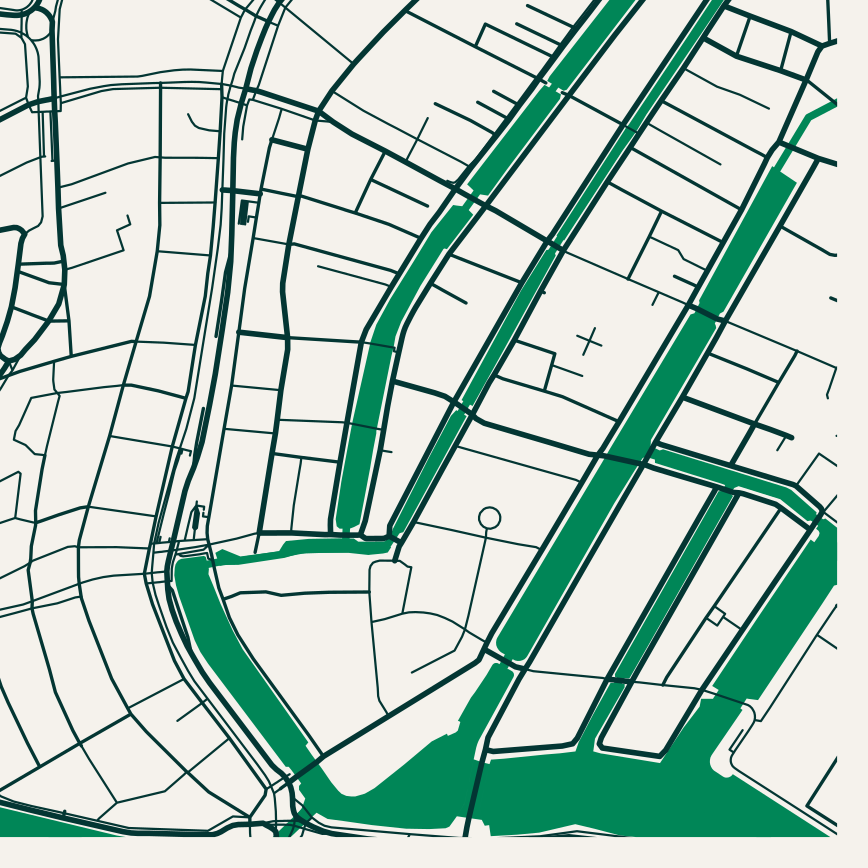 signed by Lollyvector SVG8 paths~25k nodes7 groups287 KB自分で確認する署名済みファイルを取得
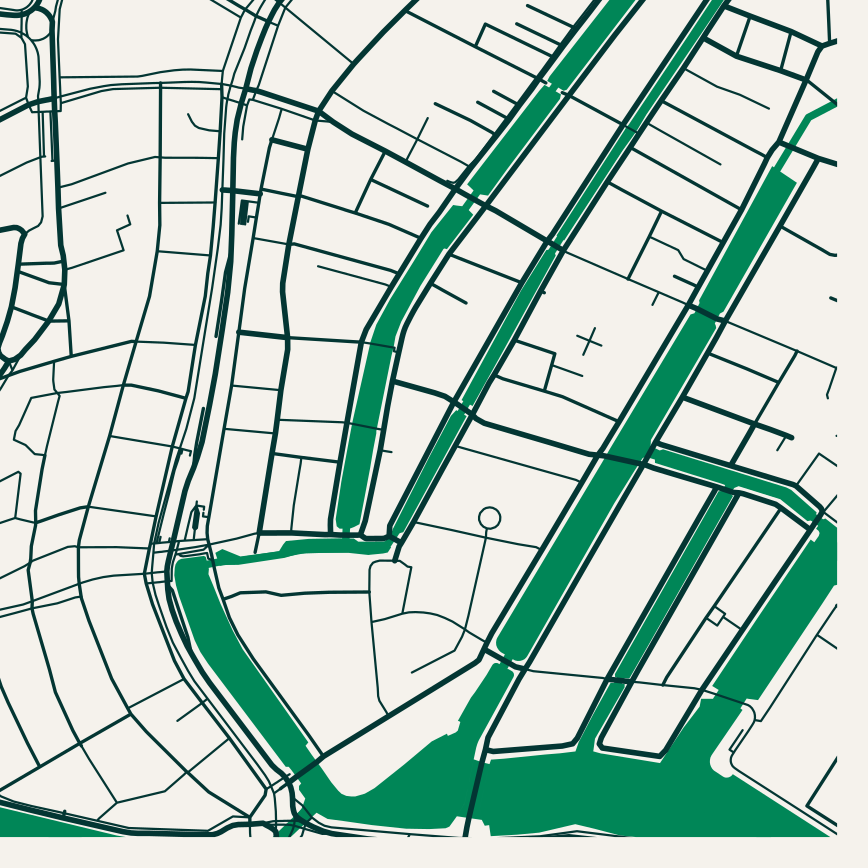 signed by Lollyvector SVG8 paths~25k nodes7 groups287 KB自分で確認する署名済みファイルを取得


コンテンツ主権
前のセクションが行き着く先には名前があります。主権です。あなたのメディアパイプラインは、あなたが所有するハードウェア上で動きます。あなたのブランド - トークン、フォント、ロゴ、それらを強制するツール - は、あなたが保持するファイルの中に、あなたが管理するバージョン管理の中に存在し、エクスポートボタン付きのベンダーデータベースの中にはありません。レンダリングは目の前のデバイス上で行われるため、アセットが存在するために第三者を経由することは一切なく、入力から完成ファイルまでの経路全体がオープンソースで検証可能です。すべてのSaaSデザインベンダーが明日消えても、Lollyのデプロイメントは何も気づきません。
これは、サブスクリプションよりも長く残るべき仕事を持つすべての人にとって重要です。フォトブックがそのノートパソコンの中に存在する親も、調達ルールの下にブランドライブラリを置く公的機関も同様です。組織にとって - 公的機関、規制産業、ブランドが装飾ではなく戦略的資産であるすべての組織にとって - 「自分たちのコンテンツはどこにあり、誰がそれを止められるのか」はガバナンスの問題であり、好みの問題ではありません。ここでの主権はコンプライアンスのために追加されたホスティング機能ではなく、アーキテクチャそのものの性質です。プライバシーポリシーと自分で検証するのページは、その主張を鵜呑みにするのではなく確認できるように存在します。
この根底にあるのは、機能ではなくコミットメントとして述べられた1つの約束です。あなたのデバイス上でレンダリングされるものは、永遠に無料です。 エンジン、シェル、ツール、フォーマット - オンデバイスのクリエイティブ経路全体がオープンソースであり、それはこの先も変わりません。この約束にはメカニズムがあります。一度リリースされたバージョンは取り消せないようにライセンスされており、後で作品を再ライセンスできるような貢献者契約は存在しません。この境界線は1文にまとめられます。あなたのデバイス上でレンダリングされるものはすべて、永遠に無料でオープンソースです。ネットワークをまたいで人とマシンを調整する仕事は、別のコントロールプレーンであるlolly.workが担います。