
Last updated: 10 November 2026
Our ethos. An open source community includes all of us. Software that anyone can read, run and change only earns that openness when anyone can actually use it, whatever they see, hear, process, speak or believe. So we treat accommodation as a form of celebration, never a compromise: a preference that makes Lolly calmer, louder, larger or more familiar for someone is not a degraded mode of the product. It is the product, meeting one more of us where they are.
- Four switches, one card Reduce motion, High contrast, Large text and Hide colourful previews. Each is off until you turn it on, and none reaches your canvas or exports.
- Calmer or richer Turn the interface down, or turn sound and music up. Every layer has its own switch.
- Your language More than 25 languages, right-to-left layouts and every language listed in its own script.
To change a setting now, open your Accessibility settings.
Your work stays yours
Lolly is a creative tool: people come here to make things that represent them. That shapes every accommodation below in one way: adjusting the app never adjusts your work.
Accessibility preferences restyle Lolly's own interface: menus, cards, navigation and type. They are built never to reach inside the tool canvas or the export stages, and automated tests fail the build if a preference's styles reach either. You should never have to choose between a comfortable app and a faithful render.
Accessibility settings
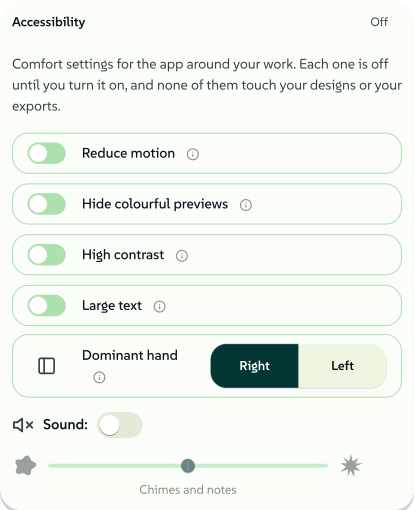
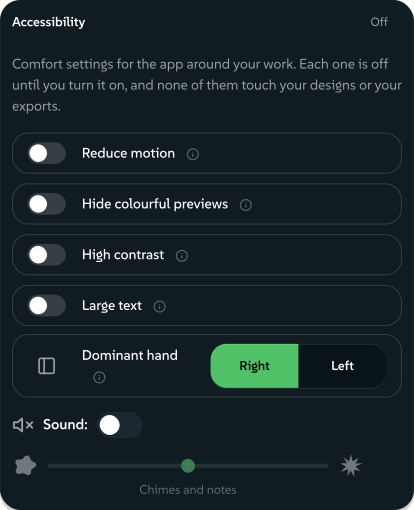
Lolly follows the platform's own signals, such as system dark mode and the reduced-motion preference. Form fields also follow the system's increased-contrast and forced-colours modes, and the iPhone and iPad app follows the system text size. On top of those, Lolly ships four opt-in preferences of its own, on one plain card in Settings:
- Reduce motion turns off transitions, slides and animated flourishes in the app. It works beside your operating system's reduced-motion setting and never overrides it: either one is enough to calm the app, and turning Lolly's switch off hands the choice back to the system setting. With it on, a swipe in present mode still changes the slide, without the slide following your finger. Animated exports keep moving exactly as designed.
- High contrast strengthens borders, text and focus rings around your work. Words drawn in your design system's main colour reach APCA Lc 75, and the keyboard focus ring grows to 3px with a band of page colour on each side. Your brand colours and canvas stay exactly as you set them.
- Large text grows the app's type and icon glyphs by a fifth, and the top row and standard controls grow to hold them. It never touches your designs: its styles stop at the canvas edge. The docs follow it too, in the app and at lolly.tools/info. On an iPhone or iPad with a larger system text size, the larger of the two applies.
- Hide colourful previews swaps the gallery's preview artwork for calm icon and text cards, and softens project thumbnails by halving their colour and contrast, so they stay recognisable without the colour noise. Full colour returns the moment you step inside a tool, so high-stimulus imagery appears only in the place you chose to work.
 signed by Lollyvector SVG35 paths~5.3k nodes68 groups66 KBCheck it yourselfSignierte Datei holen
 signed by Lollyvector SVG35 paths~5.3k nodes68 groups66 KBCheck it yourselfSignierte Datei holen


What Reduce motion keeps still
Under Reduce motion, whether it comes from the system or from Lolly's own switch:
- the first-visit greeting shows its lollipop finished, instead of drawing it;
- Lolly's mark stays still while it reads a file or applies a look, and the line-drawn animals in empty rooms stay still;
- animated gallery covers hold a still frame, and on a phone Cover Flow gives no tick as covers pass the centre;
- Design's zoom figures change at once instead of rolling;
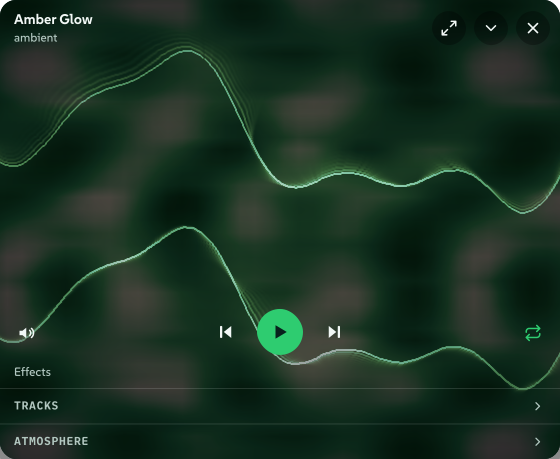
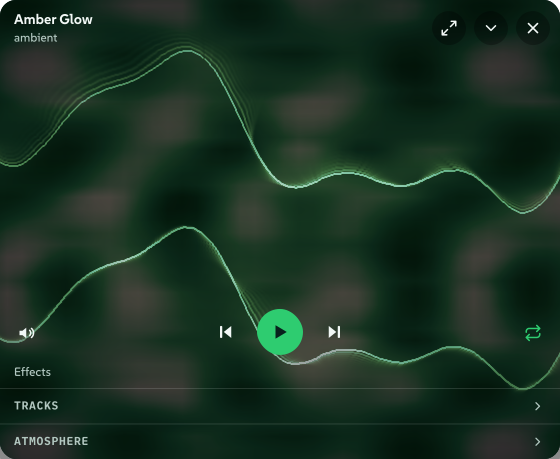
- the Neurospicy player's visualiser does not start, and its level meters rest flat;
- the music generator's shuffle button no longer spins;
- Jelly effects and Wobbly windows, when you turn them on, follow the same setting;
- the docs pages read the same switch.
Your tool canvas and every animated export keep moving exactly as designed.
The same card holds Dominant hand. On a foldable, an iPhone Duo or a near-square touch screen, where Lolly shows a tool in two panes, the controls sit on the side away from the hand you draw with (Foldables and iPhone Duo).
You can set these right now: open your Accessibility settings. That link opens the card directly. In Settings, Accessibility has its own entry in the side list, and the app's search finds each switch by the words people reach for, such as motion, contrast or bigger text, so someone who can barely read the page as it is can still find the switches.
Around the preferences, the app is built to work with a keyboard and a screen reader:
- Names and states. Controls carry accessible names and pressed states, and changes are announced to screen readers.
- Keyboard paths. A Skip to content link moves focus to the page's content. Overlays close on Escape, the drawing tools answer single keypresses, the arrow keys nudge whatever you have selected, and keyboard focus is visible, strengthened further under high contrast.
- Cover Flow. When you move the gallery's Cover Flow, your screen reader announces the centred tool and its position, such as "Chart, 2 of 6", once the covers come to rest.
- The first-visit greeting. It is a band at the top of the gallery, not a dialog, so it takes no focus: the keyboard reaches its action in reading order, and Escape puts the greeting away.
- Opening a saved document. The tool is announced only once the editor takes input, so nothing typed straight afterwards is lost. The Opening card puts focus on its title, so a stray Space or Enter cannot cancel the open.
- Phone dials. The ruler dials Lolly Darkroom shows on a phone are standard sliders to assistive technology, and answer the arrow keys, Page Up, Page Down, Home and End.
- Readable accents. Words and icons the app draws in your design system's main colour use a shade that reads at 4.5:1 or more on the app's surfaces.
Turning it down, turning it up
Neurodivergent people are not one audience with one need. The same brain that is overwhelmed by a wall of colourful thumbnails on a hard day may seek strong sensory input on another, so Lolly accommodates in both directions, always opt-in:
- Turning it down. Reduce motion and Hide colourful previews strip the interface back to icons, text and one accent colour. Navigation stays calm for people with ADHD, autistic people and dyslexic people who find dense, varied imagery hard to scan. Nothing you need (favourites, pinning, actions) is taken away in the calmer presentation.
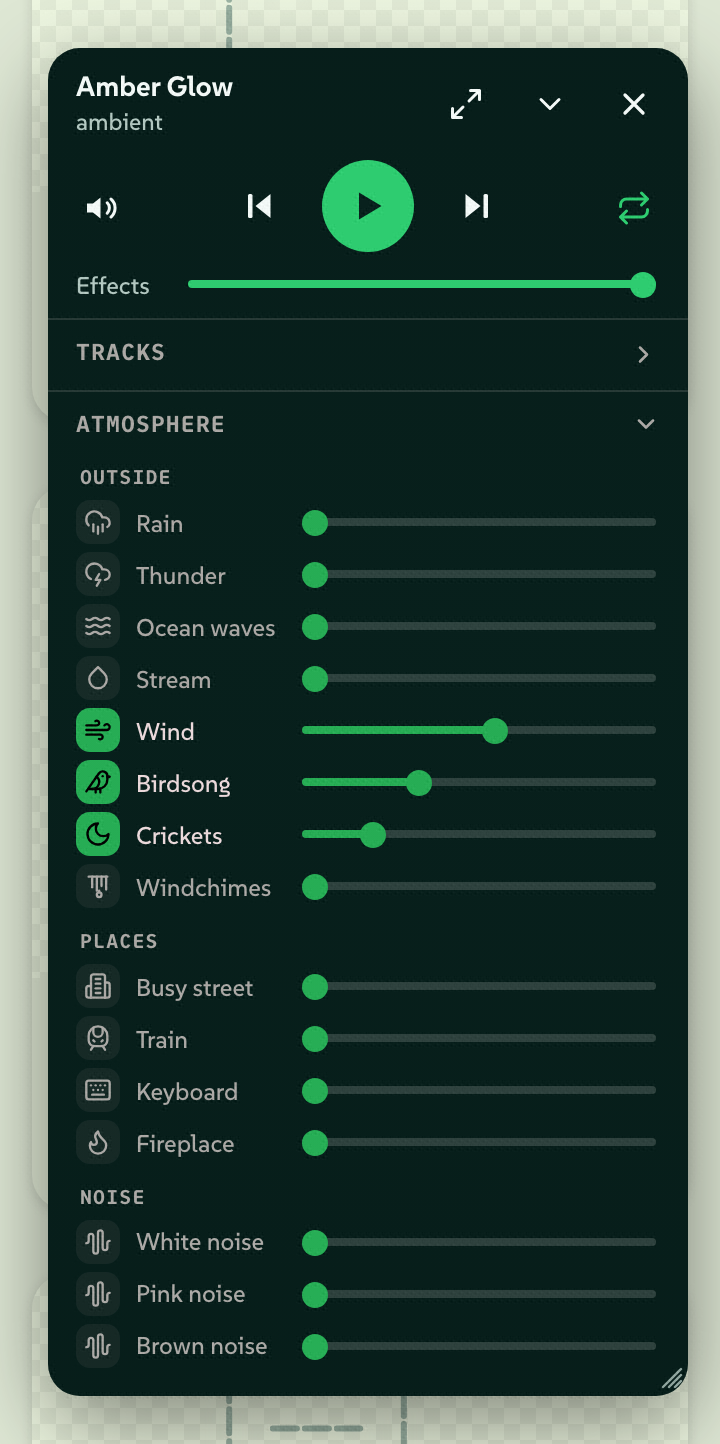
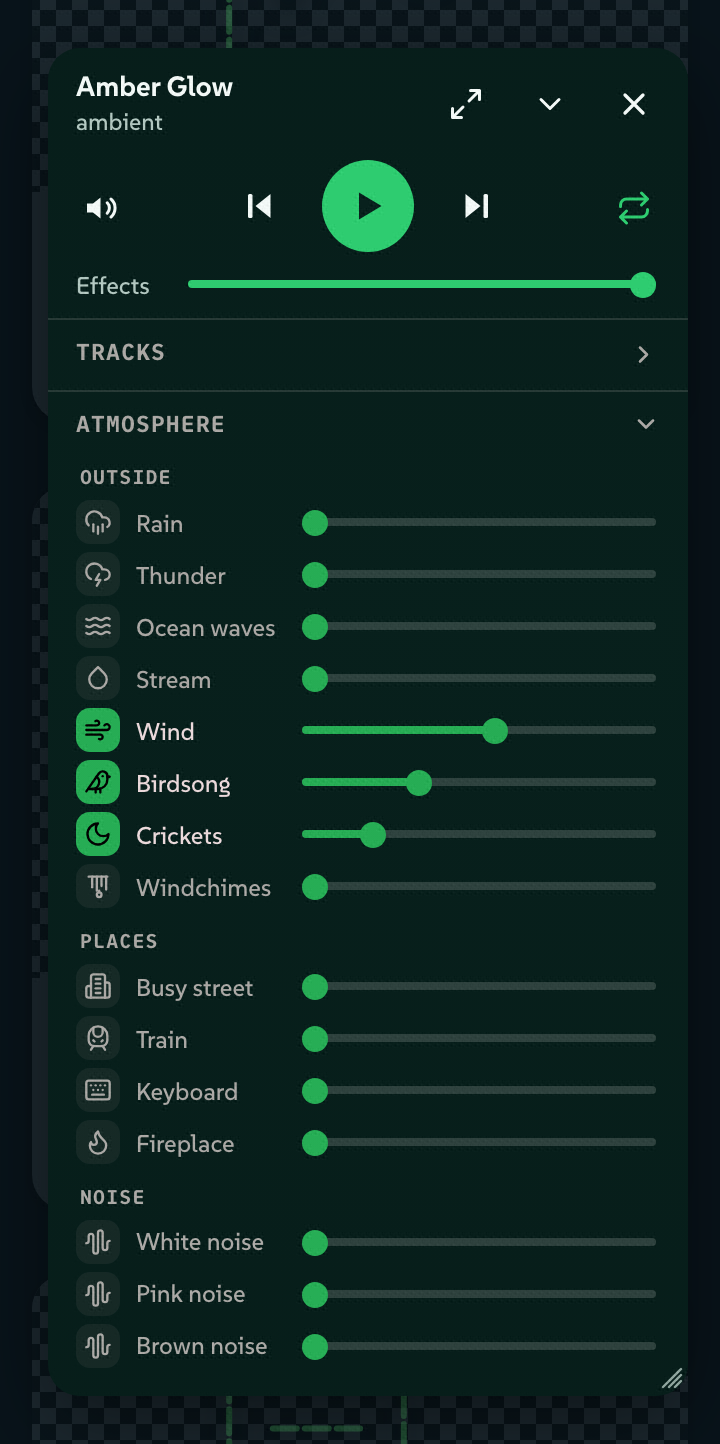
- Turning it up. Neurospicy Mode is a deliberate sensory layer, with focus music Lolly composes as it plays, an atmosphere mixer with individually levelled ambient beds, a visualiser and interface sound effects, for people who focus best with rich input. It is off by default and never plays before you ask.
- Sound has a shape. Some people find wet, bubbly sounds hard to bear and others find ticks and scratches hard to bear, so a slider under the Sound switch moves every interface sound between the two: round drops and bass at the Bouba end, dry ticks and metal at the Kiki end, the chimes in between. Each end leaves out what the other end is made of, and no interface sound ever speaks.
- Sound is separable. Every audible layer has its own switch, so "visuals calm, sound rich" and the reverse are both real configurations, not a single accessibility bundle someone else composed for you.
 signed by Lollyvector SVG5 paths~1.9k nodes11 groups25 KBCheck it yourselfSignierte Datei holen
 signed by Lollyvector SVG5 paths~1.9k nodes11 groups25 KBCheck it yourselfSignierte Datei holen


 signed by LollyPNGpixels, not shapes244 KBCheck it yourselfSignierte Datei holen
 signed by LollyPNGpixels, not shapes207 KBCheck it yourselfSignierte Datei holen


 signed by Lollyvector SVG12 paths893 nodes45 groups1 image383 KBCheck it yourselfSignierte Datei holen
 signed by Lollyvector SVG12 paths893 nodes45 groups1 image383 KBCheck it yourselfSignierte Datei holen


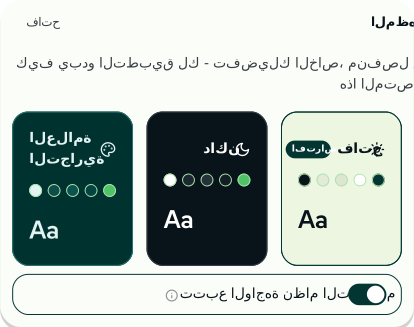
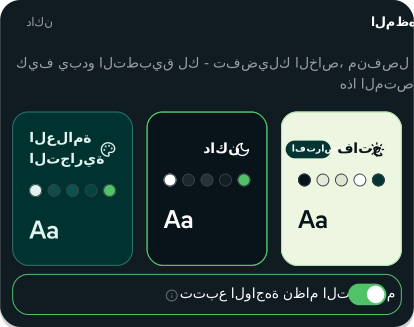
Your language
- Lolly's interface and documentation are translated into more than 25 languages, and we prioritise languages by how many people speak them, not by market revenue: Hindi, Bengali, Urdu and Indonesian arrived in the same waves as French and German.
- Right-to-left scripts are first-class: Arabic ships with full right-to-left layout, not a mirrored afterthought.
- Languages are distinct, not interchangeable. Indonesian and Malay are separate catalogs, Traditional and Simplified Chinese are separate catalogs, and the language attribute is set before first paint, so Han characters and script fallbacks render correctly for your language, not a lookalike.
- The language menu lists every language in its own name and script, and can be ordered by speaker population, so finding yours never requires knowing its English name. When your browser's language differs from Lolly's, the first-visit greeting offers a language choice too.
New text reaches the other languages in the next translation pass. In 1.2.0, text added after 7 November, such as the first-visit greeting and the Sound shape slider, stays in English until that pass.
 signed by Lollyvector SVG31 paths346 nodes52 groups20 KBCheck it yourselfSignierte Datei holen
 signed by Lollyvector SVG31 paths346 nodes52 groups20 KBCheck it yourselfSignierte Datei holen


Cultural inclusion
- lolly.tools opens in Lolly Demo, Lolly's own demo design system, with the neutral Lolly Starter one switch away. Lolly exists so your own identity, palette and type replace ours in minutes.
- Type is treated as a cultural surface. Uploaded and Google fonts are shaped with proper text shaping across scripts, so names, diacritics and non-Latin text export as correctly drawn outlines rather than missing-glyph boxes or substitutions. Scripts Lolly has no font for yet, such as Tamil, Ethiopic or Syriac, go into a PDF, EPS or WMF as a picture of the words; the 1.2.0 release notes list the cases.
- Emoji in your text are drawn from a set you choose rather than whichever one the machine happens to have, and each set carries its own credit. When a brand treatment recolours them, skin tones, flags and custom symbols keep their own colours by default.
- Copy avoids idioms and culture-bound references that translate poorly, and translators receive clean, bare strings rather than sentences with markup fragments baked in.
What Lolly needs to run
The web app needs WebGPU to start: a browser that can create a WebGPU adapter and device, over HTTPS. That leaves out some older devices and browsers, and Lolly explains the requirement before opening a tool rather than failing silently. The notice lists the browsers that work, and Supported environments lists what has been checked.
Ethical commitments
- Privacy by architecture. Your work stays on your device, there are no trackers or analytics in the codebase, and the few network touchpoints are listed in the Privacy Policy. Accessibility and language preferences are stored on your own device, and are copied only into a backup or Sync copy you make yourself: a person's disability or language is never telemetry. The app does fetch the translation for your language from its own address, like any other part of the app. The Lolly app sends no telemetry.
- Organisation servers are separate. A Lolly Work server, which an organisation runs for its members, can store usage events made of labels such as a tool id, at a level the organisation sets, from a client the organisation connects. Lolly's own apps send it none today, and those events never carry accessibility or language settings; see Telemetry and dashboards.
- Honest provenance. Exports can carry Content Credentials, and AI-generated content is labelled as such. Audiences deserve to know how media was made, and creators deserve tools that can prove their work is theirs. See Our AI Stance.
- No dark patterns. Preferences are plain switches that do what they say, they stay dormant until you choose them and platform conventions (native scrolling, browser shortcuts, standard dialogs) are respected rather than hijacked.
- Good for everyone's work. The same properties that make a tool usable on a hard day make it faster on every other day. Constraint-first tools spend almost none of your attention on choices a template should have made, and on-device rendering keeps you working on a bad connection or a locked-down machine. How Lolly compares makes the longer case.
Tests hold us to this
Inclusive design here is a policy in the engineering sense: invariants with tests, not aspirations with adjectives. The engine, shells and community tools are public, so every claim on this page can be checked in the source, and the tests fail the build when one breaks:
- every accessibility attribute is additive, so with nothing turned on the regular experience is unchanged;
- no preference's styles reach the tool canvas or the export stages;
- the app's two copies of each preference stay in step.
When an accommodation and a feature conflict, we redesign the feature. When a "hide previews" setting also hid the actions on utility cards, the fix was to keep the actions, not to excuse the loss.
If something in Lolly excludes you, whether a missing language, an overwhelming moment or an assumption we baked in without noticing, that is a bug. Tell us: fitzy@suse.com.