
Kung ano ang ginagawa ng Lolly na hindi ginagawa ng mga creative tool ngayon, at kung ano ang sinasadya nitong iniiwan sa kanila.
Para sa bersyong tool-by-tool, isang pahina bawat isa para sa Canva, Adobe, Figma, rendering APIs at online converters, tingnan ang Lolly compared, tool by tool. Sinasaad ng bawat pahina kung ano ang mas mahusay na ginagawa ng ibang tool at kung ano naman ang ginagawa ng Lolly sa halip.
Status: Nailabas na ang Lolly: ang bersyon 1.0 ay inilabas bilang open source noong 30 Agosto 2026. Wala pang independent na audit ang seguridad nito, at ilang buwan na ang adoption evidence nito. Sinasaklaw ng pahinang Adoption & Governance ang kasalukuyang kalagayan.
Mga tool ngayon
Sinusukat ng bawat ring sa ibaba kung gaano kabuo ang paghahatid ng isang product class ng isang capability ayon sa naka-ship ngayon - hindi ayon sa marketing - kung saan sinusukat ang bawat class batay sa pinakamahusay nitong kinatawan. Sinusukat ang Lolly sa parehong kutsilyo: ito ang kumukuha ng tanging pulang ring sa board, para sa maturity. Buksan ang pangalan ng isang row para sa katwiran sa likod ng mga marka nito. Isinasaayos ang mga column ayon sa Overall completeness row sa itaas - ang mean ng mga scored row, na hindi kinabibilangan ng spend row.
Lolly includes lolly.work, the same project's separately deployed organisation service. Local creation needs no account; shared work and server rendering use the configured instance. Competitor scores: August 2026. Lolly coverage: 28 September 2026.
| Capability | Lolly+ lolly.work | Penpotopen design | CanvaAffinity Cavalry |
Adobedesktop pro | Brand DAMFrontify Bynder |
Cloudinarymedia pipeline | Figmaonline pro | Render APIsBannerbear Placid Creatomate |
|---|---|---|---|---|---|---|---|---|
| Overall completenessunweighted mean - weight rows for your own context · columns are sorted by this row | 84 | 70 | 57 | 48 | 41 | 41 | 41 | 34 |
Production maturity & track recordCanva, Adobe, Figma, Bynder/Frontify: a decade-plus at massive scale. Render APIs: years in production pipelines. Penpot: shipping, large community, younger at enterprise scale. Lolly: version 1.0 public since 30 August 2026 under MPL-2.0, and SUSE runs it as an internal deployment; no usage data is shared yet and there are no public case studies yet. Cloudinary: 2012, enterprise media infrastructure at global scale. |
25 | 75 | 100 | 100 | 100 | 100 | 100 | 75 |
Mass generation from data (CSV / API)Lolly: batch grid and CLI, plus lolly.work's recoverable server jobs and batches with retries, cancellation and retained outputs. Canva: Bulk Create + Autofill API - real, but Enterprise-gated, async, text/image fields only; Affinity Publisher adds desktop data merge. Adobe: InDesign data merge and scripting. Figma: Buzz fills templates from CSV or XLSX, free in beta (Aug 2026) - cloud- and account-gated, 50. Penpot: open API/MCP, not purpose-built. Render APIs: this is their entire product - account- and cloud-gated, so 75 under the method rule. DAM: Studio-style batch create and resize. Cloudinary: URL-driven overlays and named transforms derive variants at scale - account-gated, 75. |
100 | 50 | 50 | 50 | 75 | 75 | 50 | 75 |
Offline & air-gap operationLolly: standalone creation works offline once its assets are available; lolly.work's organisation services need a reachable instance, which can run on an internal network. The Canva column is scored on its best family member: Affinity (free since Oct 2025) runs offline as a desktop suite once a verified account activates it - 75, the same deduction Adobe takes. Canva's own Offline (2026) still edits pre-synced designs only, per device, in a 14-day window. Adobe: desktop apps run offline; licensing phones home. Figma: cached-file viewing and limited editing. Penpot: self-host on your infra behind a firewall (server required). Cloud APIs and DAM: none. |
100 | 75 | 75 | 75 | 0 | 0 | 25 | 0 |
On-device rendering - data never leavesLolly: local rendering and conversion in-browser or CLI need no upload. Choosing lolly.work's shared storage, work collabs or server rendering sends the relevant data to the configured instance. Adobe: local desktop rendering, but cloud services and telemetry in the suite. Figma: canvas renders locally, files live in Figma's cloud. Penpot: 90 - rendering happens in the browser and the save target is a server that can be your own sovereign private cloud, even your own laptop, with private export throughout; only the server hop separates it from Lolly. Canva itself is server-side by design; the column's 75 is Affinity - local desktop rendering, account activation and telemetry, the same shape as Adobe. Render APIs, DAM: server-side by design. |
100 | 90 | 75 | 75 | 0 | 0 | 25 | 0 |
Hard brand constraints (structural)Lolly: templates fix layout rules and expose permitted inputs. lolly.work adds group access, input policies, shared catalogues, approvals and audit records. Copy and usage rights can still need review. Canva: element locks - permission-based, admin-set and static: no template logic such as conditional logo switching or responsive recomposition at fill time, and Canva AI does not yet respect Brand Controls - 50. Render APIs: templates are fixed (only declared fields vary) but no governance layer. DAM: locked templates with restrictions. Figma: Buzz templates hold locked guidelines at fill time; the design surface stays review-enforced - 50. Penpot: tokens and systems enforced by review, not runtime. Adobe: libraries, little enforcement. Cloudinary: presets and Enterprise-gated transformation templates fix operations, not brand layout - 50. |
100 | 50 | 50 | 25 | 75 | 50 | 50 | 75 |
C2PA provenance, signed at creationAdobe: the broadest shipped implementation (Photoshop, Lightroom, Premiere, Firefly) - signing happens locally in the desktop apps and in the cloud for the Content Authenticity web app, and nothing signs without an Adobe account and an Adobe-provisioned identity, so it is account-gated end to end: 75 under the method rule. Lolly: optional on-device signing without an account, plus lolly.work server signing with a configured organisation identity. A verifier must trust the signer's root to show a trusted identity. Version 1.0 is public and SUSE runs it internally, but no usage data is shared yet, so 75. Penpot: 50 via the official Lolly Export plugin - the same on-device engine signing Lolly uses, opt-in, as in Lolly (and disclosed plainly: it is Lolly's own plugin). No evidence of C2PA writing in Canva, Figma, render APIs or DAM as of Aug 2026. Cloudinary: 50 - signs images on delivery (fl_c2pa, CAI member since 2020), attesting delivery by Cloudinary rather than creation by you. |
75 | 50 | 0 | 75 | 0 | 50 | 0 | 0 |
CLI, pipeline & AI-agent automationLolly: CLI, TUI, MCP server and URL mode, plus lolly.work's authenticated render API, recoverable batches and governed delivery. One engine across the local and server paths. Render APIs: API-first, webhooks, integrations - account- and cloud-gated, so 75 under the method rule. Penpot: open API, plugins, official MCP server. Canva: Connect API - Enterprise-gated, async, rate-limited. Adobe: UXP/ExtendScript plus Firefly APIs. Figma: strong REST/plugin API, no render pipeline. DAM: asset-management APIs. Cloudinary: API-first media pipeline - account-gated, 75. |
100 | 75 | 50 | 50 | 50 | 75 | 50 | 75 |
Live collaboration (real-time co-editing)Figma: the scale benchmark - 200 simultaneous editors, up to 500 people in a file - account and cloud required. Canva: mature real-time editing across the product, same precondition. Penpot: real-time multiplayer with live cursors; self-hosting lifts the vendor-account precondition, but a server is still required. Lolly: direct two-device private collabs without an account, plus authenticated work collabs through lolly.work with shared edits, cursors and saved team sessions. Partial reflects the current single-node work deployment and limited operating history. Private collabs work without internet on a shared network; work collabs need the organisation's instance. Adobe: Live Co-Editing in beta, cloud documents only. Render APIs: no editing surface. DAM: comments and approvals, not canvas co-editing. Cloudinary: DAM comments and workflows, no canvas co-editing. |
50 | 75 | 75 | 25 | 25 | 25 | 75 | 0 |
No design skill requiredCanva: the category benchmark for ease. DAM: fill a locked template. Lolly: fill in fields using an existing tool, or publish a tool from Design through Share with rules. lolly.work manages access and input policy for the team. Render APIs: swaps design skill for developer skill. Adobe, Figma, Penpot: professional tools. Cloudinary: the media library is easy; transformations are developer territory. |
100 | 25 | 100 | 25 | 100 | 50 | 25 | 50 |
Open source, self-hosted, no lock-inPenpot: MPL-licensed, 51k+ stars, self-host via Docker/K8s - fully verifiable today. Lolly and lolly.work: MPL-2.0 open source in separate repositories, both self-hostable. lolly.work provides the organisation services as part of the project. The current 75 reflects the young project and limited deployment history. Everything else is proprietary SaaS or proprietary desktop. |
75 | 100 | 0 | 0 | 0 | 0 | 0 | 0 |
Cost at production scaleLolly + lolly.work and Penpot: no per-seat software licence charge for the open-source self-hosted path; hardware, storage and operations remain costs. Render APIs: metered - roughly $0.005–0.049 per image, credits often expiring monthly. Canva/Figma: per-seat; Canva's automation needs Enterprise, though Affinity itself is free since Oct 2025. Adobe: premium per-seat suite. DAM: sales-led enterprise quotes, MAU or seat models. Cloudinary: credit-metered across transforms, storage and bandwidth - 25. |
100 | 100 | 50 | 25 | 25 | 25 | 50 | 25 |
Annual medium enterprise spendIndicative list-price arithmetic for a medium enterprise - think 500-5000 people - August 2026: a guess range, not a quote; deals vary and the seat mix dominates. Ring = how much of the board's largest annual spend (US$500k) you keep; the number in the ring is each range's upper bound. Canva (US$75k-400k; Affinity free since Oct 2025 pulls the design-seat share down), Adobe (US$100k-500k) and Figma (US$30k-250k) assume the realistic creative-seat share of an organisation this size - tens to hundreds of seats, not a licence for every employee. Render APIs price by usage (US$5k-60k). DAM is quote-only, commonly US$50k-250k and up. Penpot is hand-set at 99: "your server" can be your own laptop - a small technical hurdle at well under 1% of an Adobe-scale spend. Lolly + lolly.work: US$0 in software licence charges for self-hosting. The figure excludes devices, organisation hosting, storage, support and administration; these need a separate budget. Standalone Lolly does not need the organisation service. Cloudinary: US$30k-150k, credit-based; enterprise contracts commonly sit near US$82k. |
$0 | $0 | $400k | $500k | $250k+ | $150k | $250k | $60k |
Kumpletuhan ng kakayahan sa mga creative tool ngayon, sinaliksik noong Agosto 2026. Scoring: 0 wala, 25 workaround-grade, 50 tunay ngunit gated o partial, 75 malakas may mga caveat, 100 core competency.
signed by Lollypositioning-comparison.htmlHTMLpixels, not shapes40 KBAI generatedgenerated by GPT-6I-check mo mismoKunin ang signed na fileMga tala sa scoring. Magkahiwalay na usapin ang mga available na feature at ang production maturity. Sumasalamin ang maturity score ng Lolly sa unang public release noong Agosto 2026 na wala pang independent na security audit; hindi nagpapatunay ng production track record ang pagkakaroon ng SSO, approvals o server rendering. Kasama ang lolly.work sa mga paglalarawan ng feature sa ibaba, habang nananatili sa mga marka ng kakumpitensya ang kanilang petsadong review noong Agosto.
Sinusukat ang Canva batay sa pinakamahusay na miyembro ng pamilya nito bawat row, dahil pag-aari nito ang Affinity at Cavalry (parehong ipinamahagi nang libre noong Oktubre 2025). Nakakuha ng 75 ang offline at on-device rendering sa pamamagitan ng Affinity - isang desktop suite na kailangan pa rin ng verified account at may dalang telemetry, ang deduction na kinukuha rin ng Adobe - samantalang ina-edit lamang ng offline mode mismo ng Canva ang mga pre-synced design, isang device, limitadong window. Nakakuha ng 50 ang Autofill: totoo pero Enterprise-gated, async, text at image lamang. Umakyat ng 25 papuntang 50 ang mass generation ng Figma nang mag-ship ang Buzz ng spreadsheet fill (free beta, Agosto 2026).
Isang panuntunan ang namamahala sa board: ang Full (100), sa mga row na humihipo sa iyong content o pagkakakilanlan, ay nangangailangan ng capability na magagamit mo nang walang account at walang cloud precondition; hindi kasali dito ang mga row na naglalarawan sa produkto mismo (maturity, ease of use). Ito ang nagpapabayad sa Adobe sa provenance: ang pinakamalawak na na-ship na C2PA (Photoshop, Lightroom, Premiere, Firefly) ay pumipirma nang lokal at sa cloud, pero hindi kailanman nang walang Adobe account at identity, kaya 75. Nililimita nito ang render APIs sa mass generation at automation sa parehong dahilan.
Ipinapakita ng 75 na provenance ng Lolly ang on-device offline signing: mas malakas sa arkitektura pero hindi pa na-audit, at nababasa ang device key bilang unverified sa stock validators hangga't hindi ito pinapatunayan ng isang identity o ng sariling CA ng isang organisasyon. Dumarating ang 50 ng Penpot sa pamamagitan ng opisyal na Lolly Export plugin: ang parehong engine signing, opt-in, at inihayag bilang pag-aari ng Lolly. Kinukuha rin ng Penpot ang tanging off-scale ring ng board, 90 sa on-device rendering - browser canvas, pag-save sa sarili mong sovereign cloud (kahit laptop), private export; ang server hop lamang ang naghihiwalay dito sa Lolly. Nakakakuha ang Cloudinary ng sarili nitong column: isang media pipeline (DAM, transform API, CDN), at ang tanging cloud column na nag-ship ng C2PA (50, dahil pumipirma ang fl_c2pa sa paghahatid, na nagpapatunay na delivered-by-Cloudinary, hindi made-by-you).
Tumatakbo naman sa kabaligtaran ang live collaboration: itinatakda ng Figma ang scale benchmark (200 editor) at nakakakuha ng Partial ang pairwise, air-gapped P2P ng Lolly. Isang hula ang presyo, at nakalagay ito bilang ganito: list-price arithmetic batay sa makatotohanang seat mix, sinadyang malawak, para sa scale hindi para sa procurement. Nakakakuha ang render APIs ng 75 sa constraints: naka-lock ang mga template, walang brand-governance layer.
Ang puwang: walang naka-ship ngayon na constraints-first at offline, walang account at walang server sa render path, at wala pang gumaya sa account clause. Ngayon, nag-ship na ang Lolly ng sarili nitong open canvas - Design, isang direct-manipulation na free canvas - pero ang mga kulay, type at asset dito ay sumusunod sa brand globals, kaya kahit ang malayang pag-aayos ay nananatiling constraints-first.
Ang Lolly ay hindi pa rin isang unconstrained design suite; magpapatuloy ang mga designer sa paggamit ng Illustrator at Figma para sa bespoke work - at kapag kailangan nang maging governed, reproducible asset ang trabahong iyon, dinadala ng Import a design ng Design tool ang tapos na Figma, Penpot, Illustrator, InDesign o PDF file papunta sa canvas bilang editable, brand-conformed na mga box.
 signed by Lollyvector SVG71 paths~2.7k nodes59 groups75 KBI-check mo mismoKunin ang signed na file
 signed by Lollyvector SVG64 paths~2.7k nodes59 groups74 KBI-check mo mismoKunin ang signed na file


Gamitin ito para sa
- Mabilis na paggawa ng operationalised creative assets (event tiles, badges, signatures, alerts)
- Malayang pag-aayos sa open canvas (Design) kapag ang mga piraso - kulay, type, icon, imahe - ay dapat manatiling sumusunod sa brand globals
- Pagdadala ng tapos na Figma, Penpot, Illustrator, InDesign o PDF design (ang Import a design ng Design tool) para ma-edit, magovern, at ma-re-render nang deterministic sa bawat format ng Lolly
- One-to-many na "punan ang tatlong field, kunin ang tapos na asset" na daloy - kasama ang bulk run mula sa isang spreadsheet/CSV sa
/probatch grid (i-paste o mag-import ng mga row, isang tapos na asset bawat row, i-download bilang zip) - Always-on, paulit-ulit na branded output
- Mga bagay kung saan mas mahalaga ang sentral na kontrol sa brand expression kaysa sa expressive flexibility
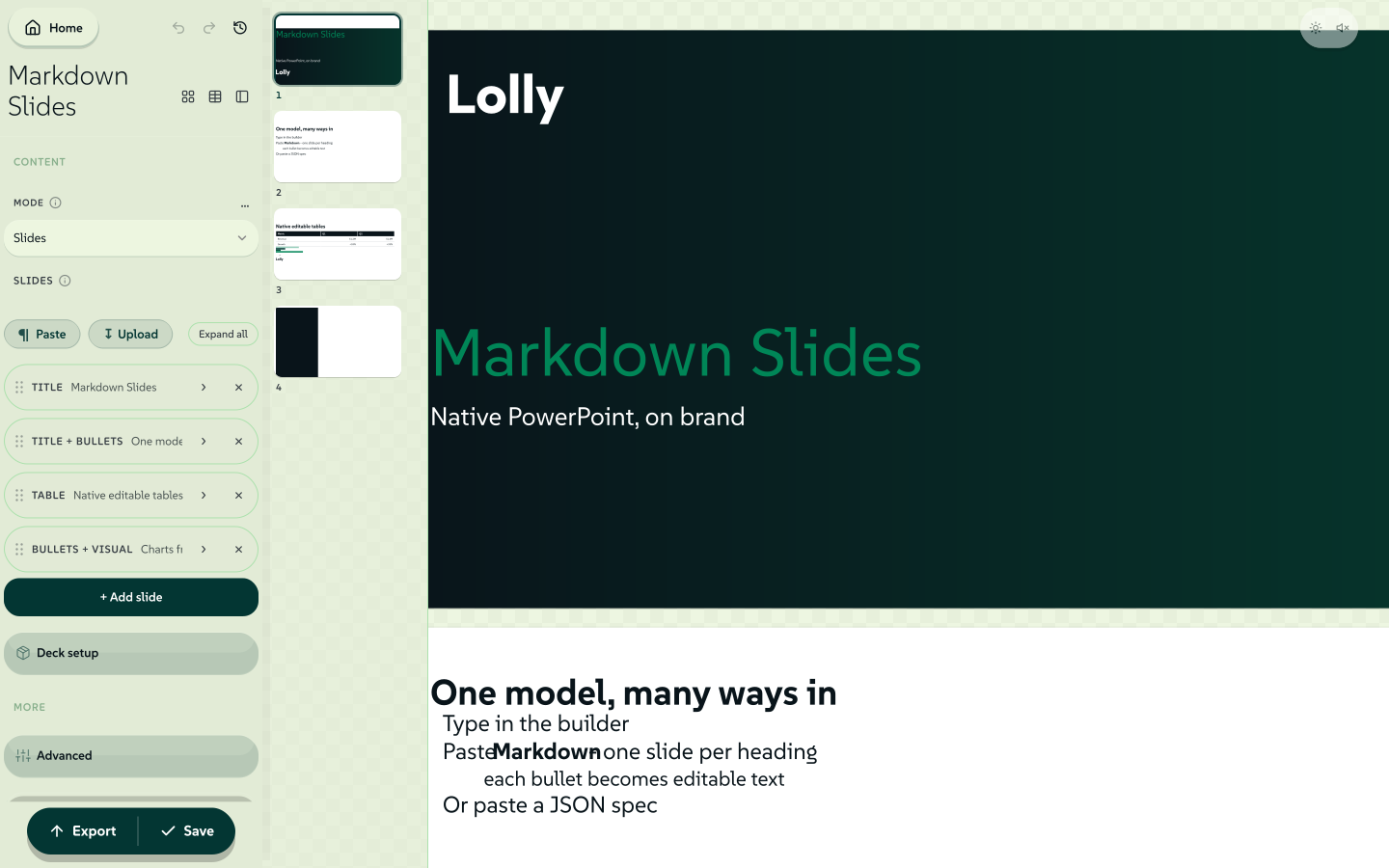
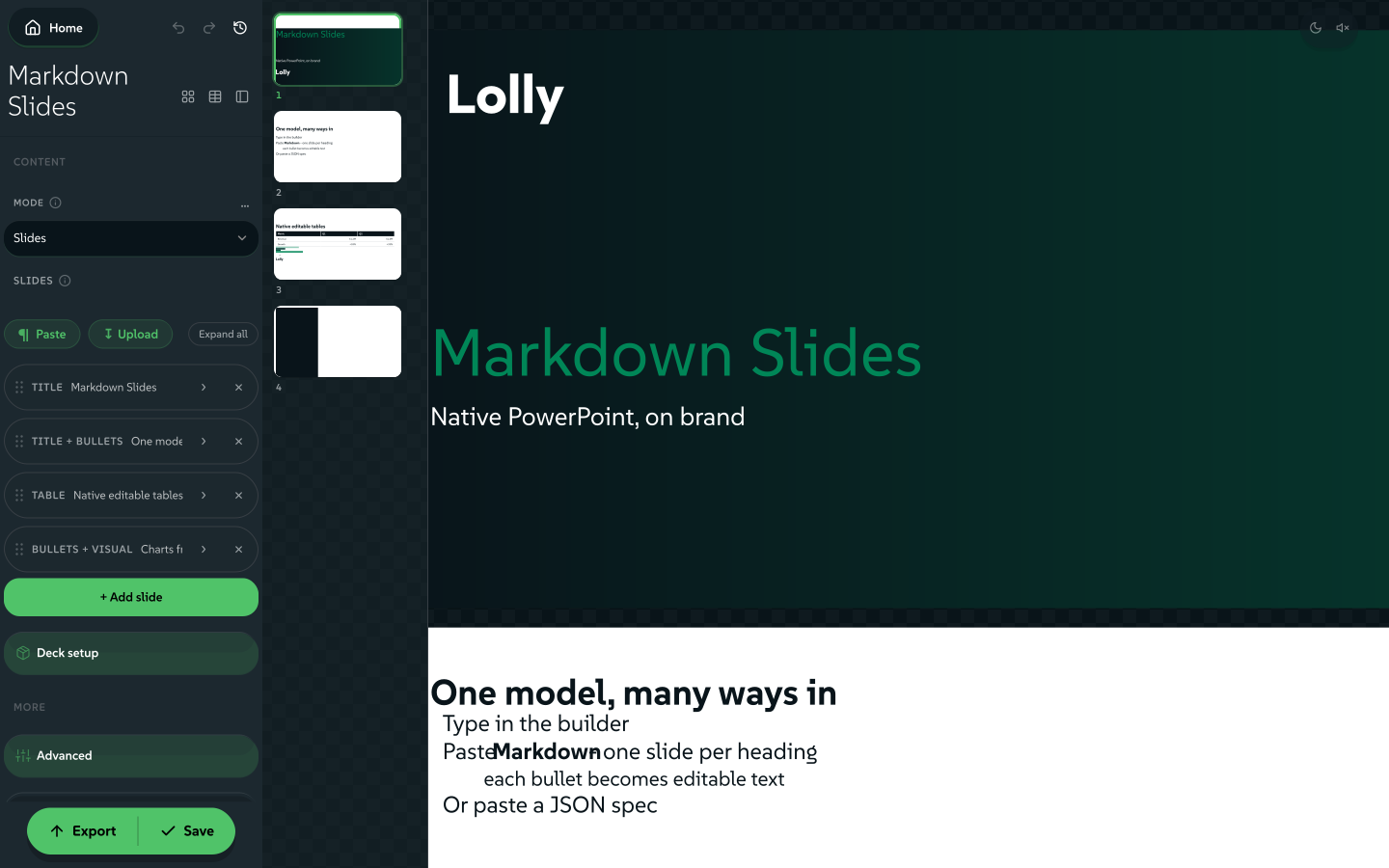
Magandang panukat ng ceiling dito ang Deck Studio: isang buong slide deck na idineklara bilang data, ina-layout nang live sa canvas at ine-export bilang native editable na PowerPoint.
 signed by Lollyvector SVG135 paths~17k nodes252 groups1 image226 KBI-check mo mismoKunin ang signed na file
 signed by Lollyvector SVG128 paths~17k nodes252 groups1 image225 KBI-check mo mismoKunin ang signed na file


Huwag itong gamitin para sa
- Bespoke o flagship hero content (billboards, malalaking video)
- Natatanging campaign work na talagang nangangailangan ng designer
- Ideation na kailangang lumaya nang tuluyan sa brand system - patuloy na isinasailalim ng open canvas ng Lolly ang mga kulay, type at asset sa brand globals, at iyan mismo ang punto
Mag-innovate nang probabilistiko, mag-scale nang deterministiko
Karamihan sa mga pitch na "AI creative" ay inilalagay ang model sa maling gilid ng isang lumang linya. Naayos na ito noon ng mga eskriba at illuminator: gumagawa ka nang maluwag sa sketch, kung saan kahit ano ay maaaring subukan at walang naka-commit, at pagkatapos ay pupunta ka sa printing press, na nakakatakot mismo dahil nagko-commit ito. Sa mga sketch nakasalalay ang sining. Sa press naman kung paano ito lumaganap. Dalawang kasangkapan, dalawang trabaho, bawat isa ay malikhain sa sarili nitong paraan, at mapagkakatiwalaan ang naka-print na trabaho dahil tinupad ng press ang pangako nito sa bawat pull.
Ang Lolly ang press, hindi ang sketch. Dalhin ang kahit ano sa ideation - isang model, isang designer, isang napkin - pero sa sandaling kailangan nang maging maraming asset ang isang ideya, dumadaan ito sa isang bagay na nagre-render nang pareho sa bawat pagkakataon, mula sa mga input na kaya ng kahit sino basahin pabalik. Iyan ang tunay na punto ng paghahambing sa itaas: hindi kung sino ang may mas mahusay na generator, kundi kung sino ang gumagawang reproducible sa committed step.
Pagkatiwalaan ang creative process, mag-scale nang may rigor.
Nakatira ang mga alituntunin sa tool at sa mga template nito
Ang bawat ibang tool sa board ay gumagawa ng file, at matitingnan lang ang isang file pagkatapos itong magawa. Inililipat ni Lolly ang mga brand rules isang hakbang paatras. Eksaktong hex codes, licensed font files, bleed margins, spacing - lahat ay naka-hard-code sa HTML at CSS ng tool, kaya hindi kayang mag-emit ang template ng off-brand na asset. Ang layout mismo ang nag-eenforce.
Kaya ang bagay na dapat tingnan ay ang tool, hindi ang bawat file na ginagawa nito. Kapag tama na ang tool, on-brand na ang bawat asset na ilalabas nito sa mismong pagkakabuo nito. Ikaw pa rin ang bahala kung paano mo susuriin ang iyong trabaho, at kung sino ang gagawa nito; pinaliit ni Lolly ang bagay na sinusuri at pinabilis ang paggawa ng output.
Ito ang pagbabagong talagang idinudulot ng deterministic engine. Para sa creative team, ito ay guard-rail, hindi kapalit - itinatapon mo pa rin ang bola (ang data, ang copy, ang imahe) at ang code ang bumper lane na pumipigil sa bawat throw na mapunta sa gutter.
 signed by Lollyvector SVG121 paths~4.6k nodes197 groups2 images113 KBI-check mo mismoKunin ang signed na file

Ang natatanging ibinibigay nito
- Malayang design potential na ligtas na naihahatid sa konteksto. Kayang ipahayag ng mga tool ang matapang na design ideas sa loob ng hard-coded na guard-rails.
- Software-defined content automation na nagbabalik ng final asset. Input → final file. Wala nang "i-save mo na lang mula sa design tool mo at i-post-process."
- Nagsasama-sama ang mga tool. Kayang i-embed ng isang tool ang render ng isa pang tool at ibalik ito bilang bahagi ng iisang tapos na asset, nang walang tool-to-tool code coupling - isang primitive na wala sa alinmang open-canvas o DAM-templating na produkto sa board.
- Vendor neutrality. Buong kontrol sa feature at gastos. Open-source na engine. Ang mga tool at asset ay git-tracked na content, hindi naka-lock sa SaaS database.
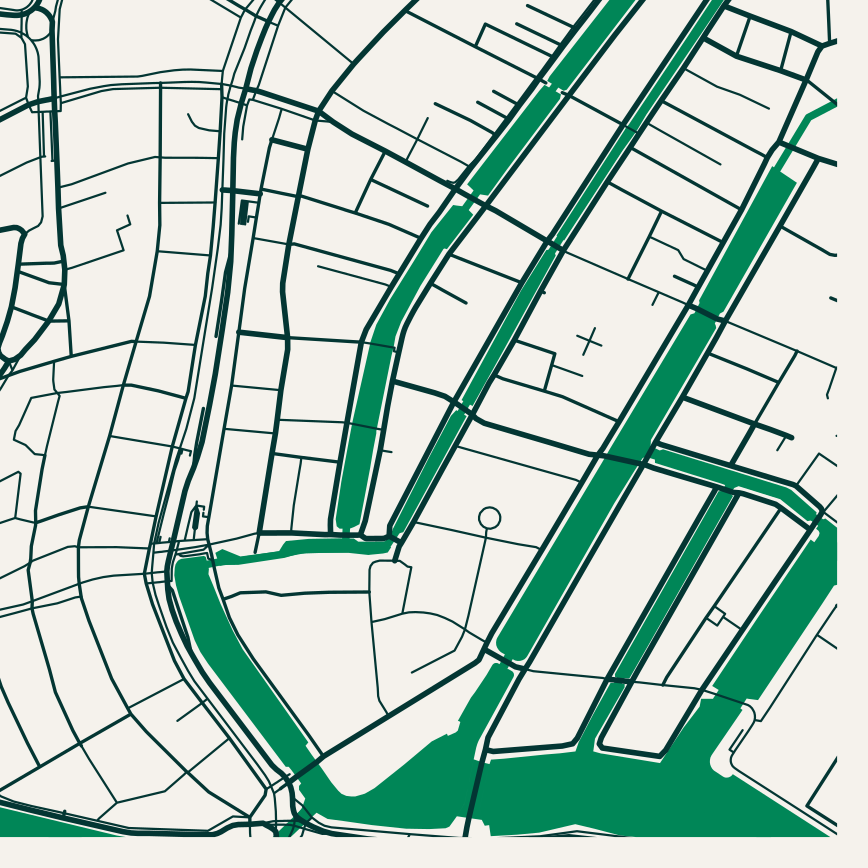
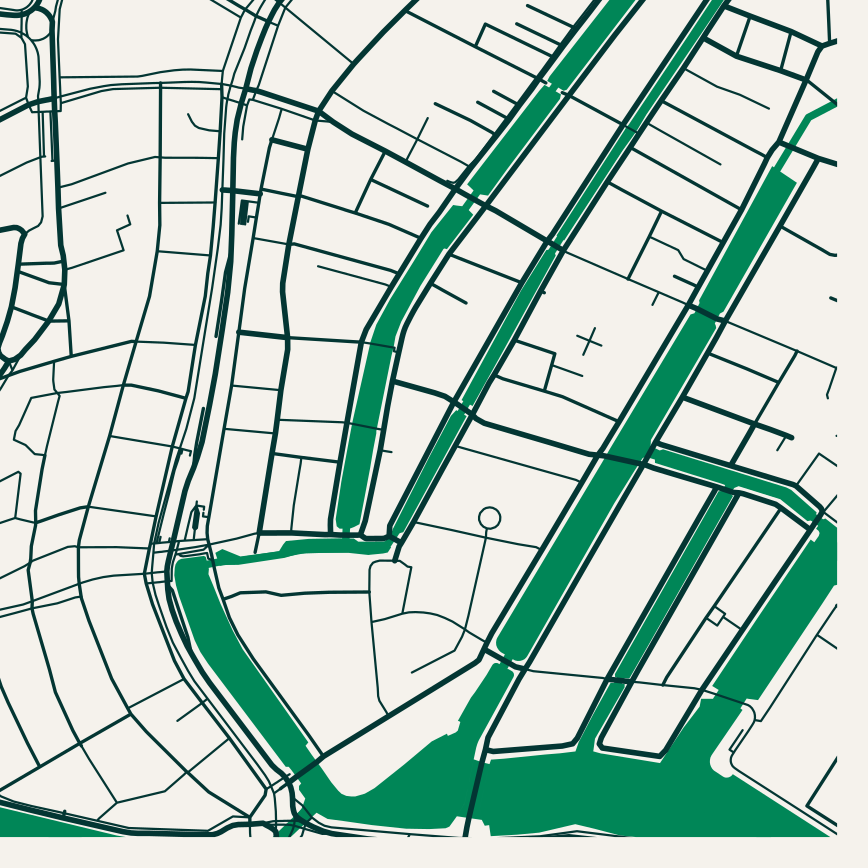
Ang una sa mga iyon ang madalas na binibigyang-kulang ng halaga ng mga tao. Isang poster-grade na city map, iginuhit bilang tunay na vector road at water paths, mula sa isang dropdown at dalawang color fields na hindi mapapatungo sa labas ng brand:
 signed by Lollyvector SVG8 paths~25k nodes7 groups287 KBI-check mo mismoKunin ang signed na file
 signed by Lollyvector SVG8 paths~25k nodes7 groups287 KBI-check mo mismoKunin ang signed na file


Content sovereignty
May pangalan ang pinagsama-samang resulta ng nakaraang seksyon: sovereignty. Tumatakbo ang media pipeline mo sa hardware na pag-aari mo. Ang brand mo - ang tokens, ang fonts, ang logos, ang mga tool na nag-eenforce sa mga ito - ay nakatira sa mga file na hawak mo, sa version control na kontrolado mo, hindi sa database ng isang vendor na may export button. Nangyayari ang rendering sa device na nasa harap mo, kaya hindi kailanman dumadaan ang isang asset sa third party para lang mabuo, at ang buong landas mula input hanggang tapos na file ay open source at maaaring siyasatin. Kung mawala bukas ang lahat ng SaaS design vendor, hindi mapapansin ito ng isang Lolly deployment.
Mahalaga ito sa sinumang ang trabaho ay dapat mabuhay nang mas matagal kaysa sa isang subscription: ang magulang na ang photo book ay nasa laptop na iyon, katulad ng public body na ang brand library ay nasa ilalim ng procurement rules. Para sa mga organisasyon - public bodies, regulated industries, sinumang ang brand ay strategic asset at hindi lamang palamuti - ang "saan nakatira ang content namin at sino ang makakapatay nito" ay isyu ng governance, hindi lamang preference. Ang sovereignty dito ay katangian ng architecture sa halip na hosting feature na idinagdag para sa compliance, at ang mga pahinang Privacy Policy at Verify It Yourself ay umiiral para masuri mo ang claim na ito sa halip na paniwalaan lamang.
Sa ilalim ng lahat ng ito ay isang pangako, sinabi bilang commitment sa halip na feature: kung nire-render ito sa device mo, ito ay libre magpakailanman. Ang engine, ang shells, ang mga tool, ang formats - ang buong on-device creative path ay open source at mananatiling ganito. May mekanismo ang pangakong iyon: ang bersyong na-release ay lisensyado upang hindi na ito mabawi, at walang umiiral na contributor agreement na maaaring mag-relicense sa trabaho sa hinaharap. Ang buong hangganan ay kasya sa isang pangungusap: lahat ng nire-render sa device mo ay libre at open source, magpakailanman; ang pag-coordinate ng mga tao at makina sa isang network ay trabaho ng hiwalay na control plane, lolly.work.