
ما يفعله Lolly ولا تفعله أدوات الإبداع الحالية، وما يتركه له عمدًا.
للاطلاع على النسخة الخاصة بكل أداة على حدة، بصفحة واحدة لكل من Canva وAdobe وFigma وواجهات برمجة العرض والمحوّلات عبر الإنترنت، انظر مقارنة Lolly، أداة بأداة. تذكر كل صفحة ما تفعله الأداة الأخرى بشكل أفضل وما يفعله Lolly بدلاً من ذلك.
الحالة: Lolly صدرت: صدر الإصدار 1.0 كمصدر مفتوح في 30 أغسطس 2026. لم يخضع أمنها بعد لتدقيق مستقل، وأدلة التبني عمرها بضعة أشهر. تغطي صفحة التبني والحوكمة الحالة الراهنة.
أدوات اليوم
تسجّل كل حلقة أدناه مدى اكتمال تقديم فئة منتج لقدرة ما كما تُشحن اليوم - لا كما يُسوَّق لها - مع تسجيل كل فئة وفق أفضل ممثل لها. يُسجَّل Lolly بنفس السكين الصارمة: فهو يأخذ الحلقة الحمراء الوحيدة في اللوحة، على النضج. افتح اسم صف لمعرفة المنطق وراء درجاته. الأعمدة مرتبة بحسب صف الاكتمال الإجمالي في الأعلى - وهو المتوسط الحسابي للصفوف المسجَّلة، مع استثناء صف الإنفاق.
Lolly includes lolly.work, the same project's separately deployed organisation service. Local creation needs no account; shared work and server rendering use the configured instance. Competitor scores: August 2026. Lolly coverage: 28 September 2026.
| Capability | Lolly+ lolly.work | Penpotopen design | CanvaAffinity Cavalry |
Adobedesktop pro | Brand DAMFrontify Bynder |
Cloudinarymedia pipeline | Figmaonline pro | Render APIsBannerbear Placid Creatomate |
|---|---|---|---|---|---|---|---|---|
| Overall completenessunweighted mean - weight rows for your own context · columns are sorted by this row | 84 | 70 | 57 | 48 | 41 | 41 | 41 | 34 |
Production maturity & track recordCanva, Adobe, Figma, Bynder/Frontify: a decade-plus at massive scale. Render APIs: years in production pipelines. Penpot: shipping, large community, younger at enterprise scale. Lolly: version 1.0 public since 30 August 2026 under MPL-2.0, and SUSE runs it as an internal deployment; no usage data is shared yet and there are no public case studies yet. Cloudinary: 2012, enterprise media infrastructure at global scale. |
25 | 75 | 100 | 100 | 100 | 100 | 100 | 75 |
Mass generation from data (CSV / API)Lolly: batch grid and CLI, plus lolly.work's recoverable server jobs and batches with retries, cancellation and retained outputs. Canva: Bulk Create + Autofill API - real, but Enterprise-gated, async, text/image fields only; Affinity Publisher adds desktop data merge. Adobe: InDesign data merge and scripting. Figma: Buzz fills templates from CSV or XLSX, free in beta (Aug 2026) - cloud- and account-gated, 50. Penpot: open API/MCP, not purpose-built. Render APIs: this is their entire product - account- and cloud-gated, so 75 under the method rule. DAM: Studio-style batch create and resize. Cloudinary: URL-driven overlays and named transforms derive variants at scale - account-gated, 75. |
100 | 50 | 50 | 50 | 75 | 75 | 50 | 75 |
Offline & air-gap operationLolly: standalone creation works offline once its assets are available; lolly.work's organisation services need a reachable instance, which can run on an internal network. The Canva column is scored on its best family member: Affinity (free since Oct 2025) runs offline as a desktop suite once a verified account activates it - 75, the same deduction Adobe takes. Canva's own Offline (2026) still edits pre-synced designs only, per device, in a 14-day window. Adobe: desktop apps run offline; licensing phones home. Figma: cached-file viewing and limited editing. Penpot: self-host on your infra behind a firewall (server required). Cloud APIs and DAM: none. |
100 | 75 | 75 | 75 | 0 | 0 | 25 | 0 |
On-device rendering - data never leavesLolly: local rendering and conversion in-browser or CLI need no upload. Choosing lolly.work's shared storage, work collabs or server rendering sends the relevant data to the configured instance. Adobe: local desktop rendering, but cloud services and telemetry in the suite. Figma: canvas renders locally, files live in Figma's cloud. Penpot: 90 - rendering happens in the browser and the save target is a server that can be your own sovereign private cloud, even your own laptop, with private export throughout; only the server hop separates it from Lolly. Canva itself is server-side by design; the column's 75 is Affinity - local desktop rendering, account activation and telemetry, the same shape as Adobe. Render APIs, DAM: server-side by design. |
100 | 90 | 75 | 75 | 0 | 0 | 25 | 0 |
Hard brand constraints (structural)Lolly: templates fix layout rules and expose permitted inputs. lolly.work adds group access, input policies, shared catalogues, approvals and audit records. Copy and usage rights can still need review. Canva: element locks - permission-based, admin-set and static: no template logic such as conditional logo switching or responsive recomposition at fill time, and Canva AI does not yet respect Brand Controls - 50. Render APIs: templates are fixed (only declared fields vary) but no governance layer. DAM: locked templates with restrictions. Figma: Buzz templates hold locked guidelines at fill time; the design surface stays review-enforced - 50. Penpot: tokens and systems enforced by review, not runtime. Adobe: libraries, little enforcement. Cloudinary: presets and Enterprise-gated transformation templates fix operations, not brand layout - 50. |
100 | 50 | 50 | 25 | 75 | 50 | 50 | 75 |
C2PA provenance, signed at creationAdobe: the broadest shipped implementation (Photoshop, Lightroom, Premiere, Firefly) - signing happens locally in the desktop apps and in the cloud for the Content Authenticity web app, and nothing signs without an Adobe account and an Adobe-provisioned identity, so it is account-gated end to end: 75 under the method rule. Lolly: optional on-device signing without an account, plus lolly.work server signing with a configured organisation identity. A verifier must trust the signer's root to show a trusted identity. Version 1.0 is public and SUSE runs it internally, but no usage data is shared yet, so 75. Penpot: 50 via the official Lolly Export plugin - the same on-device engine signing Lolly uses, opt-in, as in Lolly (and disclosed plainly: it is Lolly's own plugin). No evidence of C2PA writing in Canva, Figma, render APIs or DAM as of Aug 2026. Cloudinary: 50 - signs images on delivery (fl_c2pa, CAI member since 2020), attesting delivery by Cloudinary rather than creation by you. |
75 | 50 | 0 | 75 | 0 | 50 | 0 | 0 |
CLI, pipeline & AI-agent automationLolly: CLI, TUI, MCP server and URL mode, plus lolly.work's authenticated render API, recoverable batches and governed delivery. One engine across the local and server paths. Render APIs: API-first, webhooks, integrations - account- and cloud-gated, so 75 under the method rule. Penpot: open API, plugins, official MCP server. Canva: Connect API - Enterprise-gated, async, rate-limited. Adobe: UXP/ExtendScript plus Firefly APIs. Figma: strong REST/plugin API, no render pipeline. DAM: asset-management APIs. Cloudinary: API-first media pipeline - account-gated, 75. |
100 | 75 | 50 | 50 | 50 | 75 | 50 | 75 |
Live collaboration (real-time co-editing)Figma: the scale benchmark - 200 simultaneous editors, up to 500 people in a file - account and cloud required. Canva: mature real-time editing across the product, same precondition. Penpot: real-time multiplayer with live cursors; self-hosting lifts the vendor-account precondition, but a server is still required. Lolly: direct two-device private collabs without an account, plus authenticated work collabs through lolly.work with shared edits, cursors and saved team sessions. Partial reflects the current single-node work deployment and limited operating history. Private collabs work without internet on a shared network; work collabs need the organisation's instance. Adobe: Live Co-Editing in beta, cloud documents only. Render APIs: no editing surface. DAM: comments and approvals, not canvas co-editing. Cloudinary: DAM comments and workflows, no canvas co-editing. |
50 | 75 | 75 | 25 | 25 | 25 | 75 | 0 |
No design skill requiredCanva: the category benchmark for ease. DAM: fill a locked template. Lolly: fill in fields using an existing tool, or publish a tool from Design through Share with rules. lolly.work manages access and input policy for the team. Render APIs: swaps design skill for developer skill. Adobe, Figma, Penpot: professional tools. Cloudinary: the media library is easy; transformations are developer territory. |
100 | 25 | 100 | 25 | 100 | 50 | 25 | 50 |
Open source, self-hosted, no lock-inPenpot: MPL-licensed, 51k+ stars, self-host via Docker/K8s - fully verifiable today. Lolly and lolly.work: MPL-2.0 open source in separate repositories, both self-hostable. lolly.work provides the organisation services as part of the project. The current 75 reflects the young project and limited deployment history. Everything else is proprietary SaaS or proprietary desktop. |
75 | 100 | 0 | 0 | 0 | 0 | 0 | 0 |
Cost at production scaleLolly + lolly.work and Penpot: no per-seat software licence charge for the open-source self-hosted path; hardware, storage and operations remain costs. Render APIs: metered - roughly $0.005–0.049 per image, credits often expiring monthly. Canva/Figma: per-seat; Canva's automation needs Enterprise, though Affinity itself is free since Oct 2025. Adobe: premium per-seat suite. DAM: sales-led enterprise quotes, MAU or seat models. Cloudinary: credit-metered across transforms, storage and bandwidth - 25. |
100 | 100 | 50 | 25 | 25 | 25 | 50 | 25 |
Annual medium enterprise spendIndicative list-price arithmetic for a medium enterprise - think 500-5000 people - August 2026: a guess range, not a quote; deals vary and the seat mix dominates. Ring = how much of the board's largest annual spend (US$500k) you keep; the number in the ring is each range's upper bound. Canva (US$75k-400k; Affinity free since Oct 2025 pulls the design-seat share down), Adobe (US$100k-500k) and Figma (US$30k-250k) assume the realistic creative-seat share of an organisation this size - tens to hundreds of seats, not a licence for every employee. Render APIs price by usage (US$5k-60k). DAM is quote-only, commonly US$50k-250k and up. Penpot is hand-set at 99: "your server" can be your own laptop - a small technical hurdle at well under 1% of an Adobe-scale spend. Lolly + lolly.work: US$0 in software licence charges for self-hosting. The figure excludes devices, organisation hosting, storage, support and administration; these need a separate budget. Standalone Lolly does not need the organisation service. Cloudinary: US$30k-150k, credit-based; enterprise contracts commonly sit near US$82k. |
$0 | $0 | $400k | $500k | $250k+ | $150k | $250k | $60k |
اكتمال القدرات عبر أدوات الإبداع الحالية، وفق بحث أُجري في أغسطس 2026. التقييم: 0 غائب، 25 بمستوى حل بديل، 50 حقيقي لكنه مقيَّد أو جزئي، 75 قوي مع تحفظات، 100 كفاءة أساسية.
signed by Lollypositioning-comparison.htmlHTMLpixels, not shapes40 KBAI generatedgenerated by GPT-6تحقق بنفسكاحصل على الملف الموقَّعملاحظات التسجيل. الميزات المتاحة ونضج الإنتاج اعتباران منفصلان. تعكس درجة نضج Lolly إصدارا عاما أول في أغسطس 2026 دون تدقيق أمني مستقل بعد؛ ووجود SSO أو الموافقات أو التصيير على الخادم لا يثبت سجلا في الإنتاج. تتضمن أوصاف الميزات أدناه lolly.work، بينما تحتفظ درجات المنافسين بمراجعتها المؤرخة في أغسطس.
يُسجَّل Canva وفق أفضل أفراد عائلته في كل صف، لأنه يملك Affinity وCavalry (وقد مُنحا مجانًا في أكتوبر 2025). يسجّل العرض دون اتصال والعرض على الجهاز 75 عبر Affinity - مجموعة سطح مكتب لا تزال تتطلب حسابًا موثّقًا وتحمل قياسًا عن بُعد، وهو نفس الخصم الذي يتحمّله Adobe - بينما يحرّر وضع Canva غير المتصل تصاميم مُزامَنة مسبقًا فقط، على جهاز واحد، وبنافذة محدودة. يسجّل الملء التلقائي 50: حقيقي لكنه مقيّد بمستوى Enterprise، غير متزامن، ونص وصورة فقط. ارتفع التوليد الجماعي في Figma من 25 إلى 50 عندما أطلقت Buzz ملء جداول البيانات (نسخة تجريبية مجانية، أغسطس 2026).
قاعدة واحدة تحكم اللوحة: الدرجة الكاملة (100)، في الصفوف التي تمسّ محتواك أو هويتك، تتطلب قدرة يمكنك استخدامها دون حساب ودون شرط سحابي مسبق؛ الصفوف التي تصف المنتج نفسه (النضج، سهولة الاستخدام) مُعفاة. يكلّف هذا Adobe نقاطًا على المصدرية: أوسع تطبيق C2PA مشحون (Photoshop وLightroom وPremiere وFirefly) يوقّع محليًا وعلى السحابة، لكن أبدًا دون حساب وهوية Adobe، فيحصل على 75. ويحدّ ذلك أيضًا واجهات برمجة العرض على التوليد الجماعي والأتمتة للسبب نفسه.
تعكس درجة 75 لمصدرية Lolly التوقيع دون اتصال على الجهاز: أقوى بنيويًا لكن غير مُدقَّق، ومفتاح الجهاز يظهر كغير موثَّق في أدوات التحقق التقليدية إلى أن تكفله هوية أو مرجع مصدّق خاص بمؤسسة ما. تصل درجة Penpot، وهي 50، عبر إضافة Lolly Export الرسمية: توقيع المحرك نفسه، اختياري، ومُفصَح عنه كخاصية Lolly نفسها. كما يأخذ Penpot الحلقة الوحيدة خارج المقياس في اللوحة، 90 على العرض على الجهاز - لوحة قماشية بالمتصفح، وحفظ إلى سحابتك السيادية الخاصة (حتى على حاسوب محمول)، وتصدير خاص؛ فقط قفزة الخادم تفصله عن Lolly. يحصل Cloudinary على عموده الخاص: أنبوب وسائط (DAM، وواجهة تحويل، وCDN)، والعمود السحابي الوحيد الذي يشحن C2PA (50، لأن fl_c2pa يوقّع عند التسليم، مؤكدًا "مُسلَّم بواسطة Cloudinary" لا "مصنوع بواسطتك").
يسير التعاون المباشر بالاتجاه المعاكس: يضع Figma معيار النطاق (200 محرر) وتسجّل شراكة Lolly الثنائية المعزولة عن الشبكة (P2P) جزئيًا. السعر تخمين، ومُوسَّم على هذا الأساس: حساب حسابي بالسعر المعلن على مزيج مقاعد واقعي، واسع عمدًا، للنطاق لا للمشتريات. تحصل واجهات برمجة العرض على 75 على القيود: قوالب مقفلة، ولا طبقة حوكمة علامة.
الفجوة: لا شيء يُشحن اليوم يضع القيود أولاً ويعمل دون اتصال دون حساب ودون خادم في مسار العرض، ولم ينسخ أحد بند الحساب. يشحن Lolly الآن لوحته المفتوحة الخاصة - Design، لوحة قماشية بمعالجة مباشرة - لكن الألوان والخطوط والأصول عليها تتوافق مع متغيرات العلامة العامة، بحيث يبقى حتى الترتيب الحر واضعًا القيود أولاً.
ما لا يزال Lolly ليس إياه هو مجموعة تصميم غير مقيّدة؛ سيستمر المصممون في استخدام Illustrator وFigma للعمل المفصَّل - وعندما يحتاج ذلك العمل إلى أن يصبح أصلاً محكومًا وقابلاً لإعادة الإنتاج، يجلب استيراد تصميم الخاص بأداة Design ملف Figma أو Penpot أو Illustrator أو InDesign أو PDF النهائي إلى اللوحة كصناديق قابلة للتحرير ومتوافقة مع العلامة.
 signed by Lollyvector SVG71 paths~2.7k nodes59 groups75 KBتحقق بنفسكاحصل على الملف الموقَّع
 signed by Lollyvector SVG64 paths~2.7k nodes59 groups74 KBتحقق بنفسكاحصل على الملف الموقَّع


استخدمه من أجل
- التوليد السريع لأصول إبداعية جاهزة للتشغيل (بلاطات فعاليات، شارات، توقيعات، تنبيهات)
- الترتيب الحر على اللوحة المفتوحة (Design) عندما يجب أن تبقى العناصر - الألوان، والخطوط، والأيقونات، والصور - متوافقة مع متغيرات العلامة العامة
- إنزال تصميم Figma أو Penpot أو Illustrator أو InDesign أو PDF نهائي (استيراد تصميم في أداة Design) بحيث يمكن تحريره وحوكمته وإعادة عرضه بشكل حتمي بكل صيغة من صيغ Lolly
- تدفقات "املأ ثلاثة حقول واحصل على الأصل النهائي" من واحد إلى كثير - بما في ذلك تشغيلات جماعية من جدول بيانات/CSV في شبكة الدُفعات
/pro(الصق أو استورد الصفوف، أصل نهائي واحد لكل صف، وحمّل كملف مضغوط) - المخرجات المؤسسية المتكررة الدائمة التشغيل
- الحالات التي تكون فيها السيطرة المركزية على التعبير عن العلامة أهم من المرونة التعبيرية
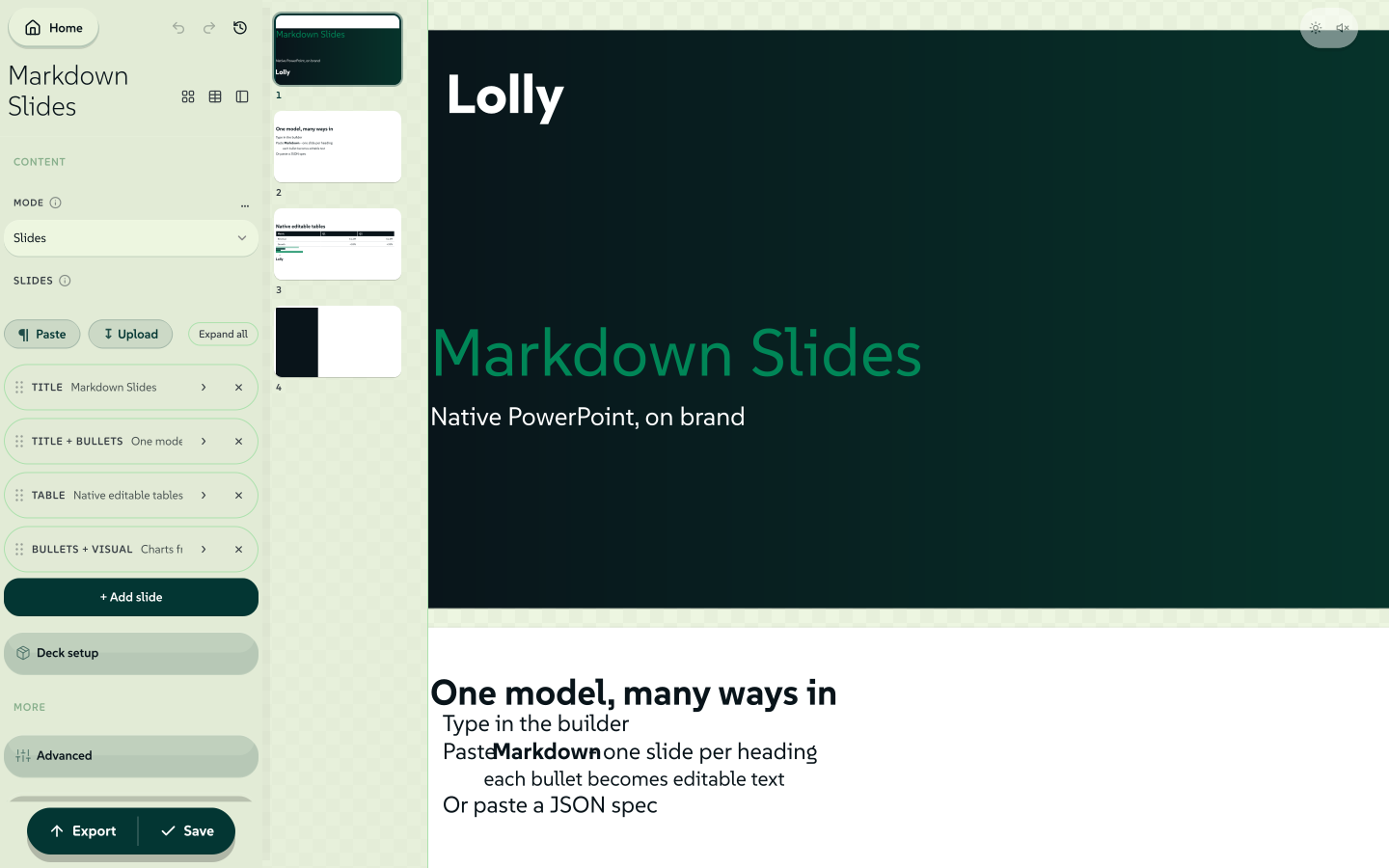
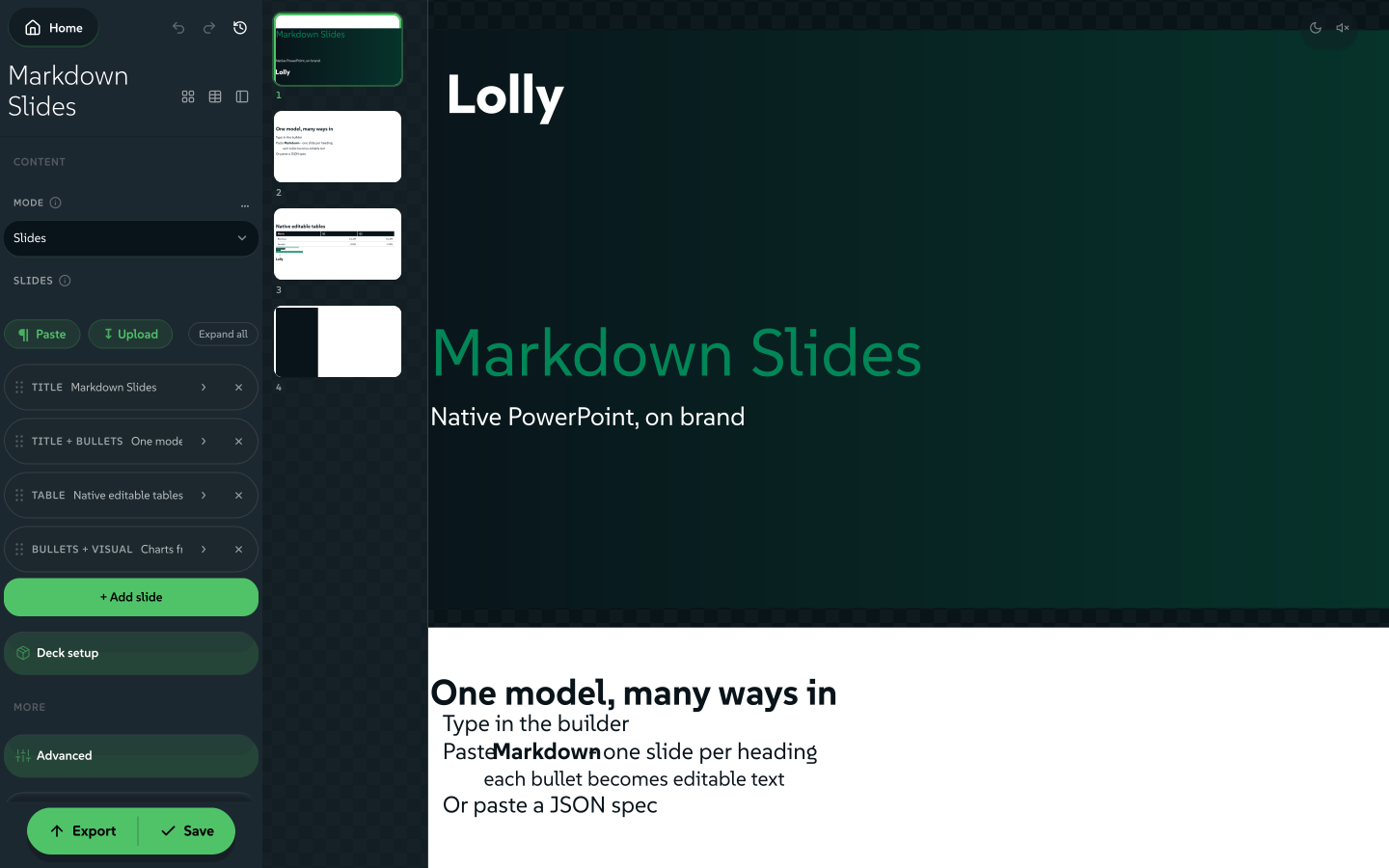
Deck Studio مقياس جيد للسقف هنا: عرض شرائح كامل مُعلَن كبيانات، مُخطَّط مباشرة على اللوحة ومُصدَّر كملف PowerPoint أصلي قابل للتحرير.
 signed by Lollyvector SVG135 paths~17k nodes252 groups1 image226 KBتحقق بنفسكاحصل على الملف الموقَّع
 signed by Lollyvector SVG128 paths~17k nodes252 groups1 image225 KBتحقق بنفسكاحصل على الملف الموقَّع


لا تستخدمه من أجل
- المحتوى الرئيسي المفصَّل أو الرائد (لوحات إعلانية كبيرة، مقاطع فيديو رئيسية)
- عمل حملة فريد يحتاج فعلاً إلى مصمم
- التفكير الإبداعي الذي يحتاج إلى الإفلات الكامل من نظام العلامة - لا تزال لوحة Lolly المفتوحة تُوافِق الألوان والخطوط والأصول مع متغيرات العلامة العامة، وهذا هو المقصود بالضبط
ابتكر احتماليًا، وسِّع النطاق حتميًا
تضع معظم عروض "الإبداع بالذكاء الاصطناعي" النموذج على الجانب الخاطئ من خط قديم. لقد حسم الوراقون ومزخرفو المخطوطات بالفعل مكان وقوعه: تعمل بحرية على المسودة، حيث يمكن تجربة أي شيء ولا يُلتزم بشيء، ثم تذهب إلى المطبعة، وهي مخيفة تحديدًا لأنها تُلزِم. المسودات كانت مكان الفن. المطبعة كانت وسيلة انتقاله. أداتان، ومهمتان، وكل منهما مبتكرة بطريقتها، وكان العمل المطبوع جديرًا بالثقة لأن المطبعة وفت بوعدها في كل بصمة.
Lolly هو المطبعة، لا المسودة. أحضر ما شئت إلى مرحلة التفكير الإبداعي - نموذجًا، أو مصممًا، أو منديل ورق - لكن في اللحظة التي تحتاج فيها فكرة إلى أن تصبح أصولًا كثيرة، تمر عبر شيء يعرض بالطريقة نفسها في كل مرة، من مدخلات يمكن لأي شخص قراءتها لاحقًا. هذا ما تدور حوله المقارنة أعلاه فعلاً: ليس من يملك المولِّد الأفضل، بل من يجعل الخطوة المُلزِمة قابلة لإعادة الإنتاج.
ثِق بالعملية الإبداعية، وانشر بصرامة.
القواعد تعيش في الأداة وقوالبها
كل أداة أخرى في السوق تنتج ملفًا، ولا يمكن النظر في الملف إلا بعد إنتاجه. تنقل Lolly قواعد العلامة التجارية خطوة إلى الأعلى. رموز اللون السداسية الدقيقة، وملفات الخطوط المرخصة، وهوامش السطح، والمسافات - كل ذلك مضمّن في HTML وCSS الخاصين بالأداة، بحيث لا يمكن للقالب أن يُصدر أصلًا مخالفًا للعلامة التجارية. والتخطيط نفسه هو من يفرض الالتزام.
لذا فإن الشيء الذي يستحق النظر إليه هو الأداة، لا كل ملف تصنعه. اضبط الأداة بشكل صحيح، وكل أصل تنتجه بعد ذلك يكون متوافقًا مع العلامة التجارية بحكم البناء. كيف تتحقق من عملك، ومن يقوم بذلك، يبقى أمرك أنت؛ تجعل Lolly الشيء الذي يُفحص أصغر والمخرج أسرع في الصنع.
هذا هو التغيير الذي يحققه المحرك الحتمي فعليًا. بالنسبة لفريق الإبداع، هو حاجز أمان لا بديل - أنت لا تزال ترمي الكرة (البيانات، النص، الصورة) والكود هو المسار الواقي الذي يمنع كل رمية من الخروج عن المسار.
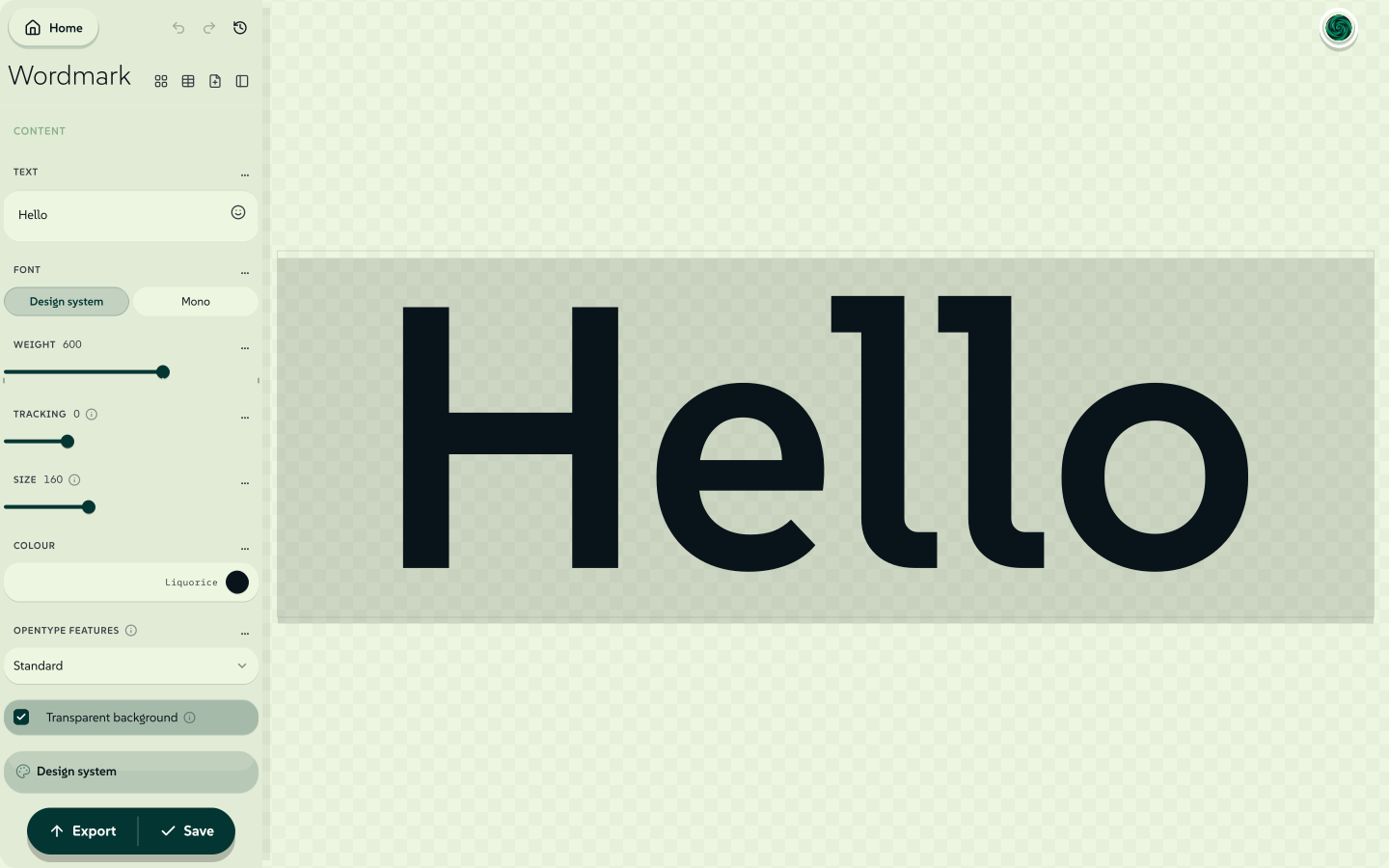 signed by Lollyvector SVG121 paths~4.6k nodes197 groups2 images113 KBتحقق بنفسكاحصل على الملف الموقَّع

ما توفره Lolly بشكل فريد
- إمكانات تصميم جامحة تُقدَّم بأمان ضمن السياق. يمكن للأدوات التعبير عن أفكار تصميم جريئة داخل حواجز أمان مضمّنة في الكود.
- أتمتة محتوى معرّفة بالبرمجيات تُعيد الأصل النهائي. إدخال ← ملف نهائي. لا حاجة لـ"احفظه الآن من أداة التصميم ثم عالجه بعد ذلك".
- الأدوات تُركّب أدوات أخرى. يمكن لأداة واحدة تضمين نتيجة عرض أداة أخرى وإعادتها كجزء من أصل نهائي واحد، دون أي ارتباط برمجي بين الأدوات - وهي إمكانية لا يقدمها أي منتج قائم على لوحة رسم مفتوحة أو قوالب إدارة الأصول الرقمية في السوق.
- حياد المزوّد. تحكم كامل في الميزات والتكلفة. محرك مفتوح المصدر. الأدوات والأصول محتوى متتبَّع بـ git، لا حبيسة قاعدة بيانات SaaS.
الأول من هذه هو ما يستهين به الناس عادة. خريطة مدينة بجودة الملصقات، مرسومة كمسارات طرق ومياه متجهية حقيقية، من قائمة منسدلة وحقلي لون لا يمكن توجيههما خارج العلامة التجارية:
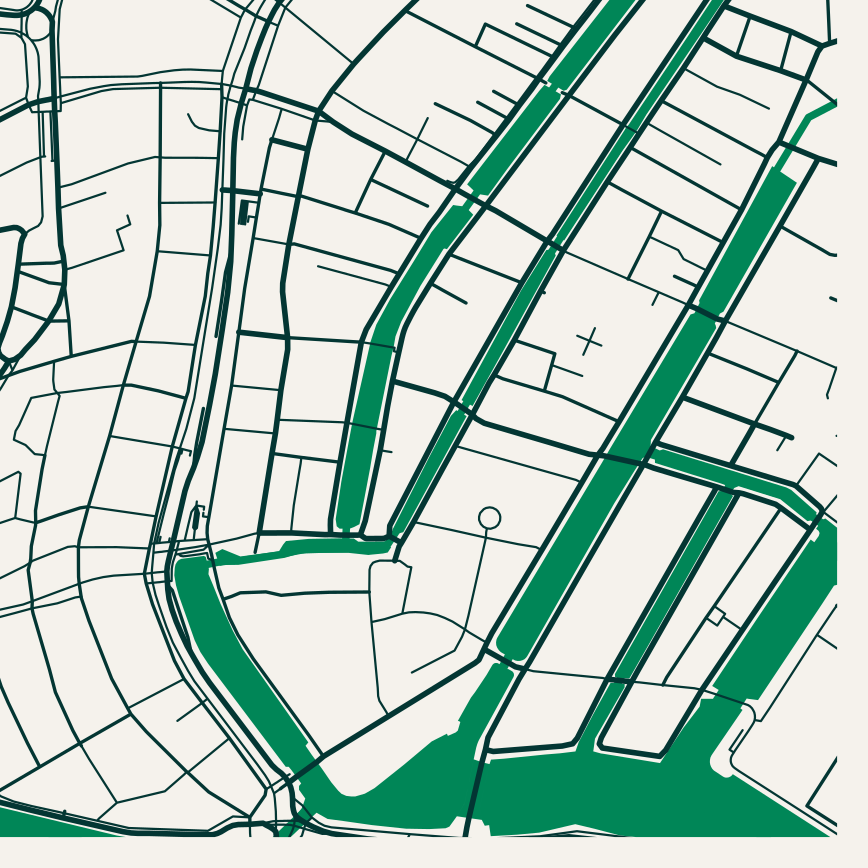 signed by Lollyvector SVG8 paths~25k nodes7 groups287 KBتحقق بنفسكاحصل على الملف الموقَّع
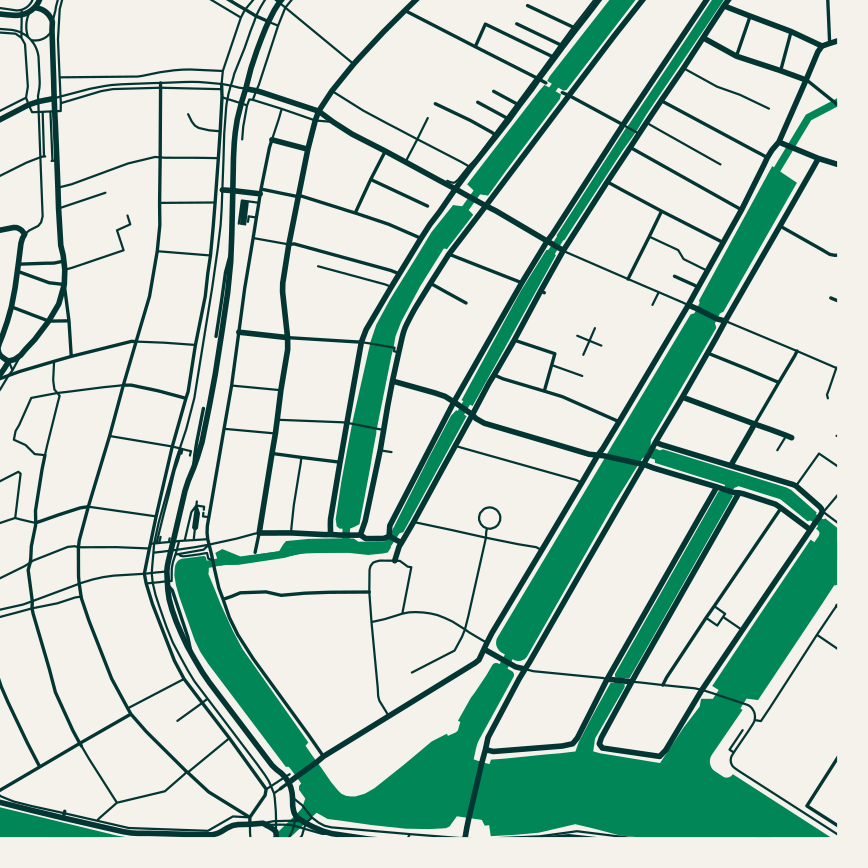 signed by Lollyvector SVG8 paths~25k nodes7 groups287 KBتحقق بنفسكاحصل على الملف الموقَّع


سيادة المحتوى
هناك اسم لما يفضي إليه القسم السابق مجتمعًا: السيادة. مسار الوسائط لديك يعمل على أجهزة تملكها أنت. علامتك التجارية - الرموز، الخطوط، الشعارات، الأدوات التي تفرضها - تعيش في ملفات تحتفظ بها أنت، في نظام تحكم بالإصدارات تتحكم فيه أنت، لا في قاعدة بيانات مزوّد مع زر تصدير. يجري العرض على الجهاز الذي أمامك، فلا يمر أي أصل عبر طرف ثالث ليوجد، والمسار الكامل من الإدخال إلى الملف النهائي مفتوح المصدر وقابل للتفحص. لو اختفت كل شركات SaaS للتصميم غدًا، لما شعر نشر Lolly بذلك.
هذا مهم لكل من يجب أن يبقى عمله أطول من اشتراك: الوالد الذي يعيش ألبوم صوره على ذلك الحاسوب المحمول، بقدر ما تعيش مكتبة العلامة التجارية لجهة عامة تحت قواعد المشتريات. بالنسبة للمؤسسات - الجهات العامة، الصناعات المنظمة، وكل من تكون علامته التجارية أصلًا استراتيجيًا لا زخرفة - فإن سؤال "أين يعيش محتوانا ومن يستطيع إيقافه" هو سؤال حوكمة، لا تفضيل. السيادة هنا خاصية في البنية لا ميزة استضافة أُضيفت للامتثال، وصفحتا سياسة الخصوصية وتحقّق بنفسك موجودتان لتتحقق من هذا الادعاء لا لتصدّقه فحسب.
وتحت كل ذلك وعد واحد، مذكور كالتزام لا كميزة: إذا كان يُعرض على جهازك، فهو مجاني إلى الأبد. المحرك، الواجهات، الأدوات، الصيغ - مسار الإبداع الكامل على الجهاز مفتوح المصدر ويبقى كذلك. لهذا الوعد آلية: أي إصدار صدر مرخّص بحيث لا يمكن سحبه، ولا توجد أي اتفاقية مساهمين قد تسمح بإعادة ترخيص العمل لاحقًا. الحد الفاصل بأكمله يتّسع لجملة واحدة: كل ما يُعرض على جهازك مجاني ومفتوح المصدر إلى الأبد؛ أما تنسيق الأشخاص والأجهزة عبر شبكة فهو مهمة مستوى تحكم منفصل، lolly.work.