
_Last checked: 28 September 2026._
If you generate images from templates through an API today, this page says how Lolly does the same job on your own device, in CI or on your own server.
What hosted rendering APIs do better
Bannerbear and Placid package rendering as managed services, with their own infrastructure, integrations and support. You send a request and someone else runs the servers.
Where they overlap
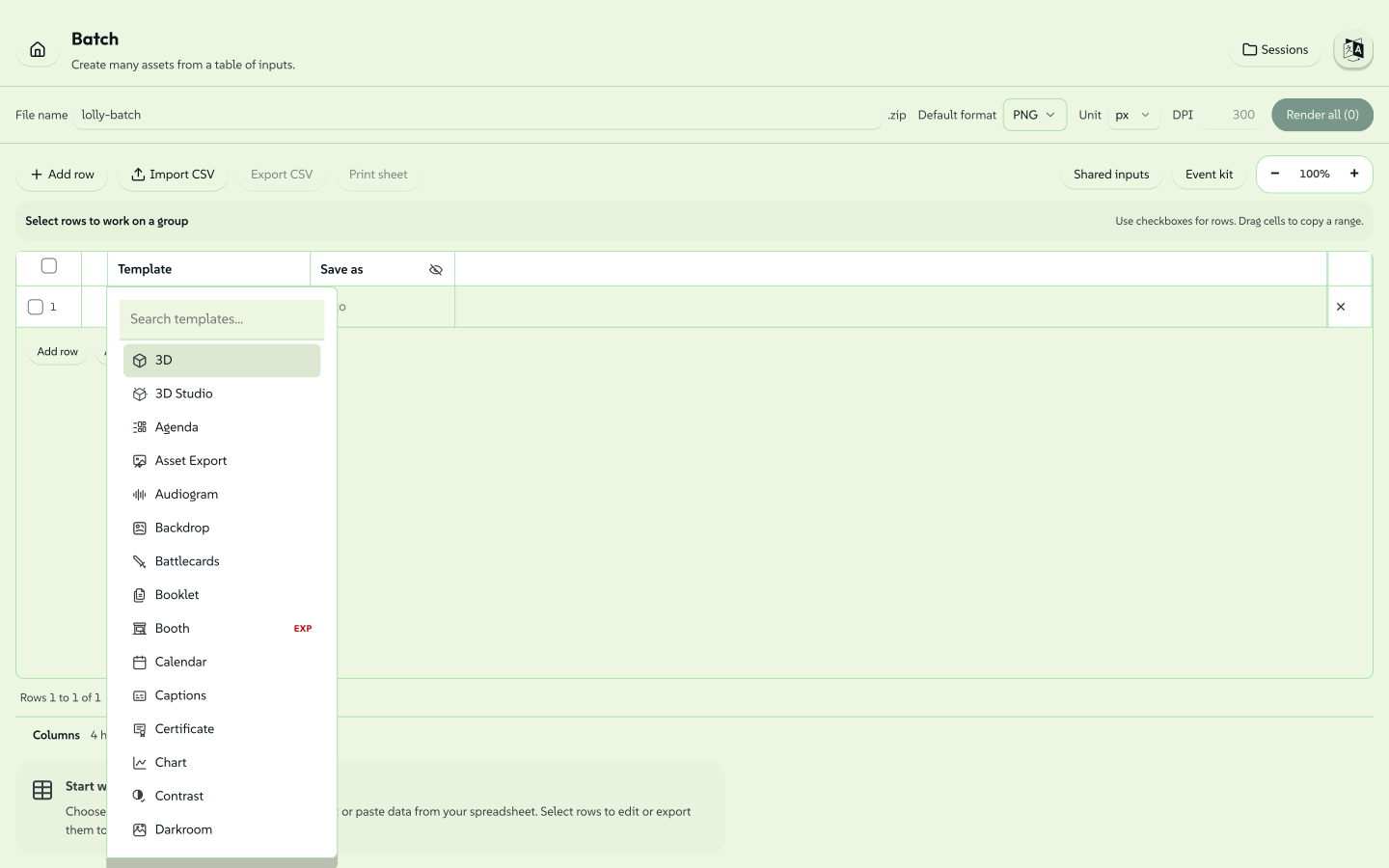
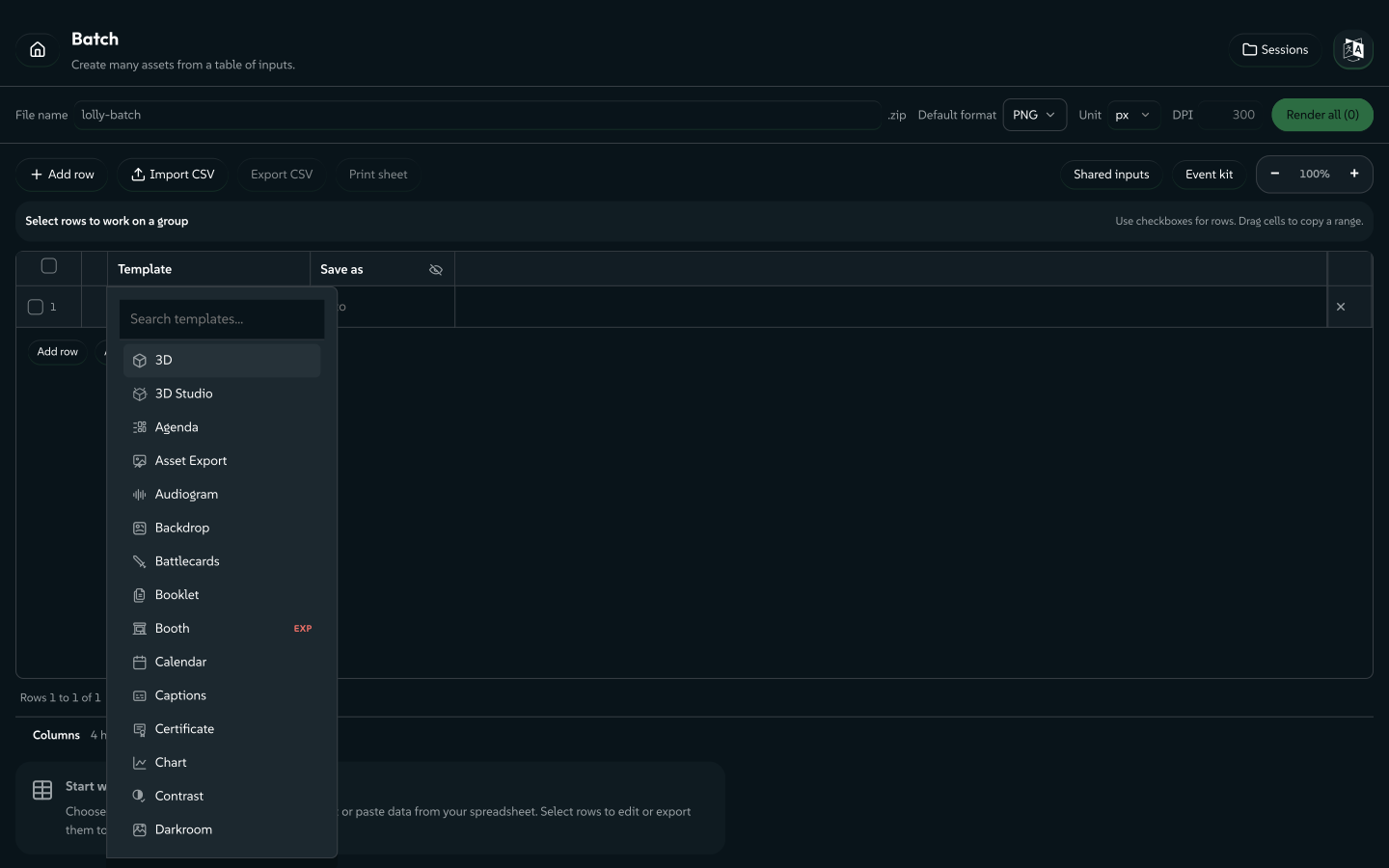
Both turn a template plus inputs into media. Lolly takes the inputs from a link, the CLI, a batch grid or a server endpoint.
How Lolly does the overlapping job
The same tool renders on a laptop, in a CI job or on a server, from the same inputs. Local and CI rendering need no service at all.
 signed by Lollyvector SVG133 paths~15k nodes185 groups1 image195 KBCheck it yourselfGet the signed file
 signed by Lollyvector SVG133 paths~15k nodes185 groups1 image195 KBCheck it yourselfGet the signed file


On a server, Lolly Work runs the Lolly engine behind an API and applies tool visibility and input policies. Its recoverable render service supports single jobs and batches, idempotent submission, status, bounded retries, cancellation and retained outputs, and interrupted work resumes after a restart when persistent storage is configured.
The server has a fast SVG and PNG path and an optional Chromium worker for tools that need a browser. Automation signs in with service tokens, finished output can go through approved delivery to organisation destinations, and a configured signing identity adds Content Credentials to supported output.
Who runs the service
With Lolly, an individual renders locally, or a team runs Lolly Work on its own infrastructure. Submitting a server job sends its inputs and required assets to that instance, which is different from the on-device path. A durable service needs a persistent database and output storage, and browser-dependent tools need the Chromium worker; Install Lolly Work describes both.
Bannerbear and Placid are trademarks of their owners. This page describes where the products overlap and is not affiliated with either.