

PrototypeClosed pilot in progress · hardening for enterprise scale

Production-ready files in seconds - design rules, layout logic, and export quality built in. No waiting, no guesswork.
Runs on your own device. Nothing to upload, nothing to learn, works offline.

100% Free · No Cookies · No Sign-up · Works offline · Open Source · Privacy First · 58 Example Tools Loaded
Founded by SUSE
Why we built Lolly

Everyday creative work
shouldn’t be this hard.

Most people don’t want a design studio. They want one correct file, now - without breaking the brand, without waiting on someone, and without handing a private document to a website they’ve never heard of. Lolly exists to take those three frustrations away.

Off-brand anxiety

The quiet dread of picking the wrong colour or font and getting it wrong in public.

The bottleneck

Every small asset stuck in a queue behind a busy designer, a slow tool, or one more approval.

Cloud dependence

Uploading sensitive files just to convert or crop them - and being stranded the moment you’re offline.

The old way
The Lolly way
Email a brief to the design team, then wait days for one small graphic.
Fill in a few fields. The finished asset is ready in seconds.
Guess at the right font, colour and logo - and hope it passes brand review.
The design rules are baked into the tool. They bend, not break.
Upload a contract, payslip or private photo to a random free website to convert or crop it.
Everything runs on your own device. Nothing is uploaded; nothing leaves the responsible individuals device.
Re-make the same badge, card or banner a hundred times by hand.
Paste a spreadsheet. Get a hundred finished, print-ready files at once.
“Which version is the latest?” - hunting through Slack threads and shared drives.
The asset is a link. Same inputs, same file, every single time.
No signal on the plane, or a locked-down network - so you’re simply blocked.
Works fully offline, on any device, once it has loaded once.
Embargoed content: Comms professionals are locked out of engaging collaborators securely.
lock, encrypt, and password files, zips, and share links - all with zero internet

Who needs Lolly?

Select your role to see what Lolly does for you.

Marketers
Everything finished, without the wait.

You need a quote card, an event tile, a localized signature - today, not next sprint. Lolly hands it back finished and on-brand, even if you've never opened a design tool. The rules live in the template, so the output comes out right.

  • Fill in a few fields, get the finished asset. No fonts to pick, no colours to second-guess, no "is this the right logo?" The tool already knows. You bring the words.
  • Infinite permutations, one source of truth. Localize a quote card into 12 languages, swap a brand lockup across 40 campaigns, or generate every size variant for every placement - without touching the design. Drive it all from a spreadsheet in the batch grid: paste or import a CSV, get one finished asset per row.
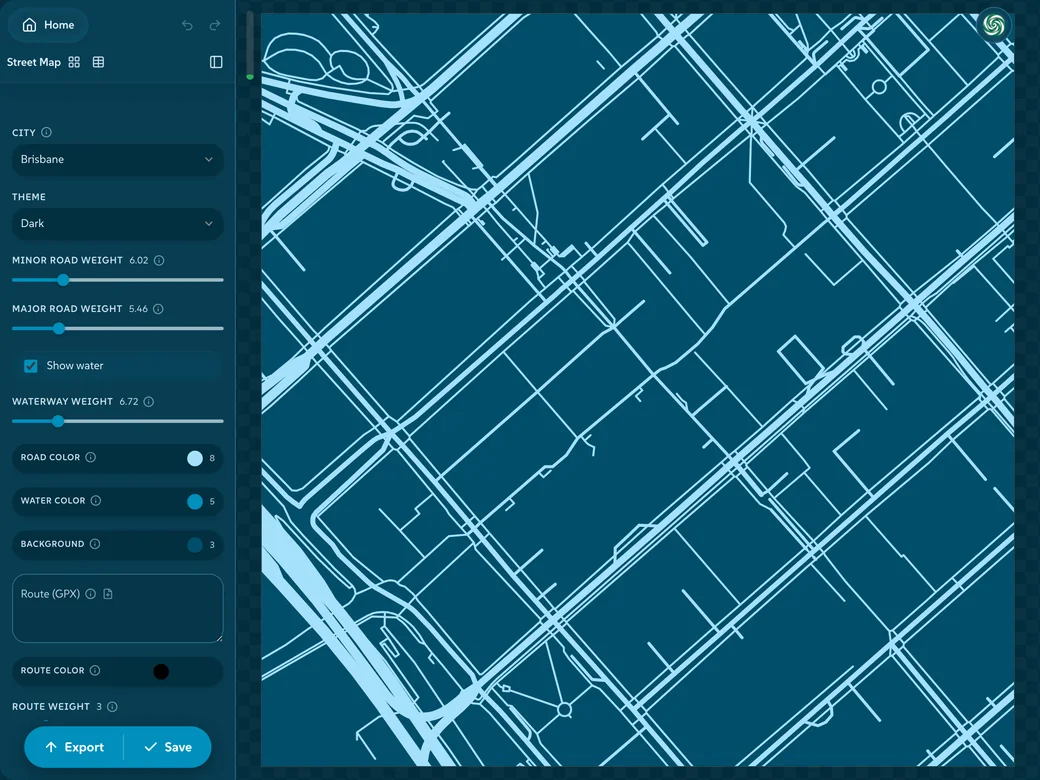
  • No creative-agency bottleneck for routine assets. Email signatures, event countdowns, quote cards, street maps - everything your team needs on a Tuesday at 4pm, self-serve.
  • Collaborate without compliance risk. No customer data uploaded to third-party cloud services. No SaaS licensing to audit. Runs entirely on local device compute.
Sales
Walk into every meeting with exactly what you need.

You're on the road, the deck is wrong, the customer asked for something specific. Lolly turns any device into an asset studio - no designer, no wait, no excuses.

  • Wait on nothing. If you're on the road, there are no days left before your meeting, you need assets now. Generate them.
  • Fix the deck you already have. Drop the PowerPoint on Lolly: rebrand it to the house style on your device and send the .pptx back, or open it as editable slides and fix it on the spot.
  • One person army. The power of a coordinated global campaign in the palm of your hand. Every rep, every region, the same polish.
  • World class experience. Nothing looks rushed even though it was rendered instantly. Nothing is a one-off - so every interaction gets a little more polished than the last.
  • Wow your team is fast! They're asleep. This was solved the first time I needed it.
Journalists
Your editorial toolkit, built for speed and precision.

Build your info-editorial style once, then generate publication-quality assets from live data as it happens.

  • Bring data directly into visuals. Connect structured data to chart, map, and table templates. Update the numbers; the layout takes care of itself.
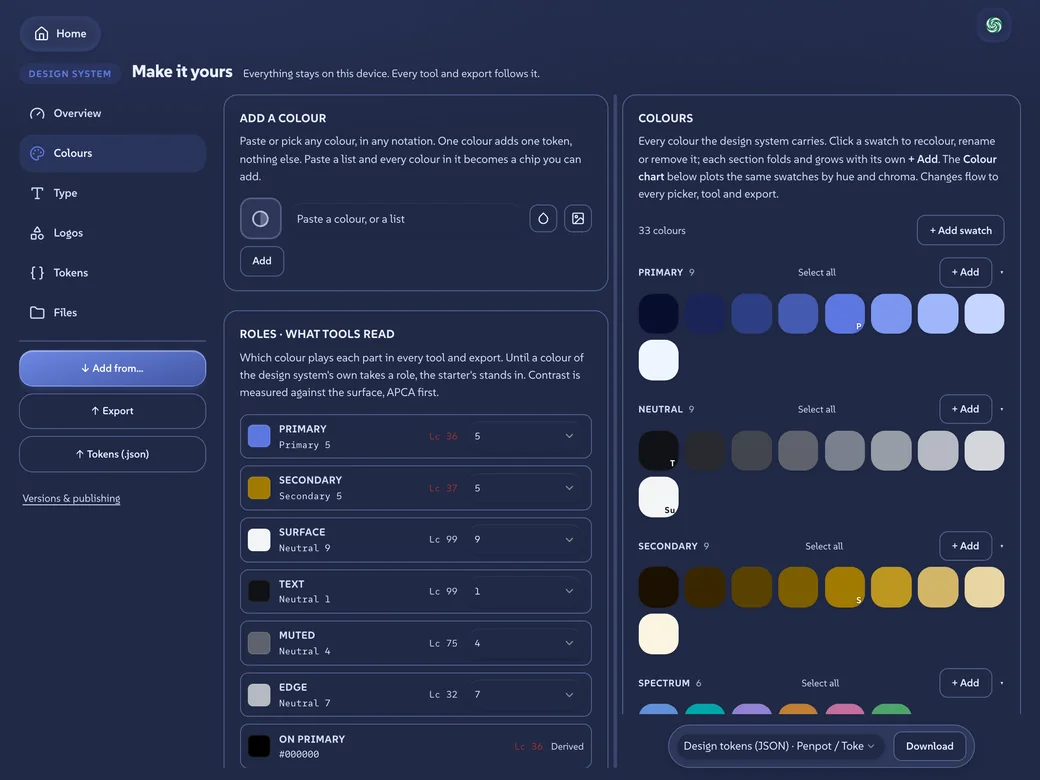
  • Match your publication's style, exactly. Tools are authored with hard-coded typographic and color constraints - your house style enforced at the template level, not as a loose guideline.
  • Print-ready or screen-ready. Export SVG, CMYK PDF, high-res PNG, or 60fps video from the same template. One source, every format your production desk needs.
  • Reusable formats for recurring stories. Election results, quarterly earnings, weather events - build the template once and reuse it every time the story runs.
Operations
Industrial rigour for everyday output.

Not everything is marketing. Consignment labels, badge runs, compliance one-pagers, incident notices - output where the layout is load-bearing and the data can't be wrong. Lolly treats structured content with the same rigour as elite design.

  • Structured data in, exact output. Feed a CSV or JSON table and every field lands precisely where the template expects it - one finished file per row.
  • Physical precision. Real units (mm/cm/in/pt), true DPI, bleed and crop marks. A label printer or a print shop gets exactly what it needs.
  • Logic runs inside the tool. Barcodes, date maths, conditional layouts, contrast checks - computed at render time, not by hand.
  • Deterministic by design. Same inputs, same file, every time. Auditable, repeatable, automatable from the CLI or a pipeline.
Media & Creatives
Stop doing things machines do best.

You design systems and solve problems, not one-offs. Lolly is the execution layer that turns your design decisions into tools your whole organization can use - without you in the loop for every asset.

  • This is the frontier. Advanced filters, compositing, animation, generative design - the platform has no ceiling. Every web technology is available to the template author. Do more than any creative suite would allow - with all the power to get finished production quality.
  • Tools compose tools. One tool can embed another tool's output as a live asset - a name badge that renders its own QR code, a card that drops in a live chart - with no design tool and no manual compositing.
  • Author tools, not files. Build a template that generates 10,000 social cards rather than making 10,000 social cards. Your time goes to the design problem, not the production run.
  • Eliminate the tedious. Optimal typesetting, logo placement, map pin positioning, color contrast checks, export sizing - all resolved at the template layer. You define the rules once, leave the repetition to the machine.
  • Lock what shouldn't change, free what should. Hard-code the brand constraints. Expose only the variables that are actually meant to vary. The tool becomes the creative guardrail.
Developers
Your build pipeline should include your visuals.

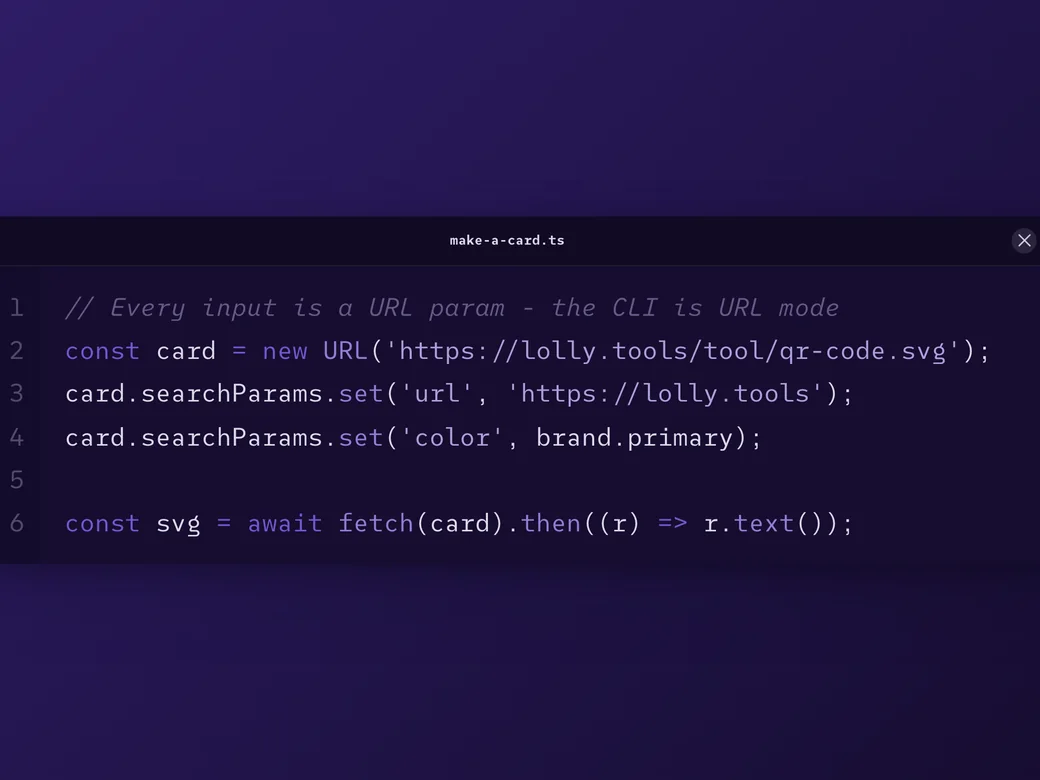
Images are build artifacts. Treat them that way. Lolly runs from the CLI so you can generate assets the same way you generate everything else - repeatably, automatically, and as part of your workflow.

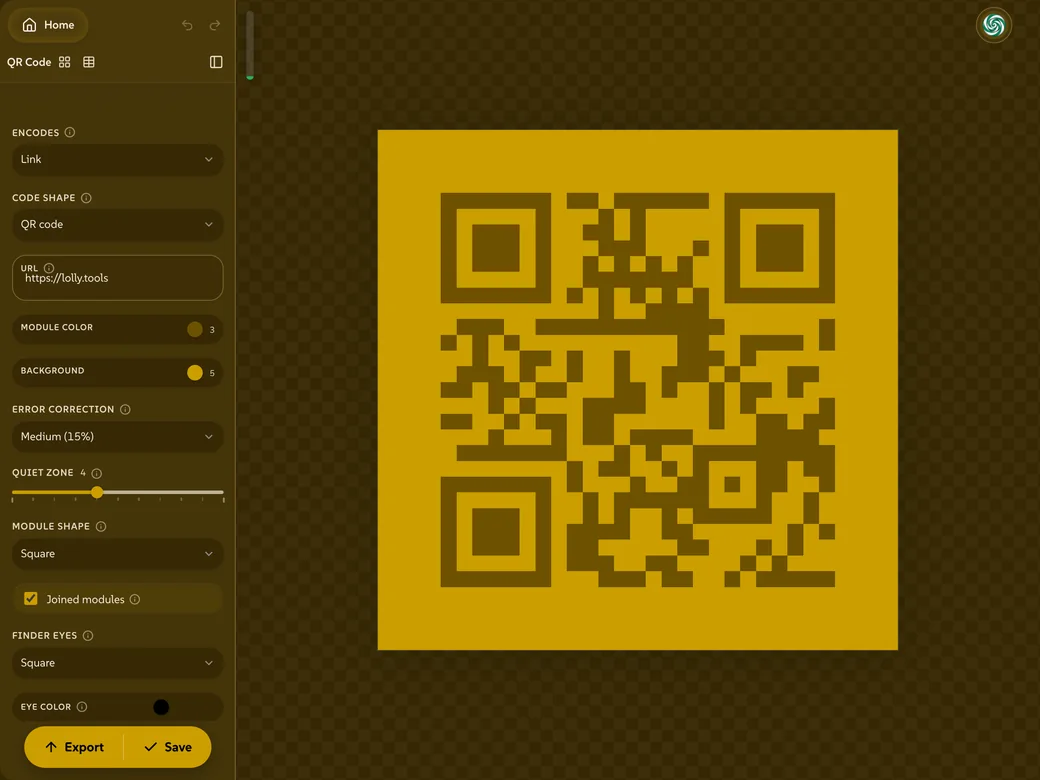
lolly qr-code --url=https://suse.com --output=og-qr.svg
lolly quotes --quote="Ship it." --output=quote.png
  • Skip the genAI media lottery. You tried genAI media - expensive, and not close enough. Lolly is free, faster, local content automation that removes their slop and your slog.
  • Reproducible outputs. Same inputs produce the same file, every time. Commit a URL, regenerate on demand - no more checking in images or chasing the latest version from Slack.
  • Get media out of your codebase. Generate OG images, QR codes, social cards, and data visuals at build time instead of storing binaries in Git.
  • Execute logic inside assets. Tools like Code Canvas and Chart Creator let you place real content - code snippets, structured data, live values - inside production-quality templates without building a custom renderer.
  • Zero lock-in. Open source engine, local compute, no API keys, no rate limits.
AI Agents
Tell your model to use a tool, not hallucinate.

A URL with parameters is a few tokens. A creative brief plus image generation is thousands - and the result still isn't press-quality. Lolly gives your agent a deterministic, reviewable creative layer, ready for production.

Use Lolly to invite the team to KubeCon.

Parameters:
  title: "KubeCon 2026"
  date: "2026-11-10"
  location: "Atlanta"

Output the file URL.
  • Production Quality doesn't drift. Tools produce production quality artwork at a fraction of the compute - done locally. Tools are hard-coded. When your model gets lazy, the layout won't. The typographic rules, the color values, the spacing - they're structural, not prompted.
  • Save tokens at scale. Generating a custom event card from a URL costs a fraction of what it costs to prompt-engineer the same output through a generative model.
  • Put data where it belongs. Structured inputs map to structured templates. Speaker names, session times, product versions - placed precisely where the design expects them, every time.
  • Deterministic, auditable, version-controlled. Every output is reproducible from its inputs. No stochastic surprises in production assets.
IT and security teams at large enterprises
Creative files shouldn't be a security risk.

Every time someone uploads a file to a third-party service to "just make it look right," that's a data exfiltration event waiting to happen. Lolly eliminates the problem at the source - creative production stays on-device, on-premise, and under your control.

  • Data never leaves the device. By default, nothing is transmitted to any third party - no cloud rendering, no analytics, no telemetry. What colleagues create stays on their machine. On-device utilities like Strip Hidden Data scrub EXIF and metadata from images, SVG, and PDF entirely in the browser - nothing is uploaded. Even locking a PDF, a whole download, or a share link with a password happens on-device; the password never leaves it.
  • Self-host for full air-gap control. Deploy on your own infrastructure. No server-side processing, no database, no backend. Operate entirely offline, behind your firewall, with your own access policies.
  • Reduce vendor surface area. One open-source platform replaces a sprawl of SaaS subscriptions for creative production. Fewer vendors means fewer contracts, fewer audits, and fewer breach vectors.
  • Enforce brand governance at the infrastructure level. Tools are authored once and distributed as data - not files, not manual processes. What goes out the door is exactly what was approved to go out the door.
  • Get critical information into human-readable formats instantly. Incident communications, compliance reports, executive briefings - structured data becomes publication-quality output in seconds, no design bottleneck.
  • Hardening for enterprise scale. Lolly is a closed-pilot prototype: its cryptography and file-parsing engines are currently undergoing SUSE's strict infrastructure hardening, preparing for enterprise scale - we're really good at this. Provenance and on-device encryption are strong by design; pilot them in a scoped context while that hardening completes. See Adoption & governance.
What is this?

Lolly

Rendering engine. production-quality. Zero lock-in.

A powerful creative production platform.

The Lolly engine works to achieve the highest quality each format can produce - true vectors, outlined type, print-grade colour, native editable output.

100% free and open source.

No SaaS fees, no usage limits, no vendor dependency.

Works everywhere.

Web PWA, Mac, Linux, iOS, Android, CLI, terminal TUI - same engine, same output.

Works offline.

Local compute, local storage. No internet required after first sync.

Formats, in and out.

Renders 27 export formats and ingests 25 source formats - see the full breakdown below.

Production quality.

Outlined type, Spot color support, 60FPS · Media fit for the studio.

Tools

A self-contained template.
Layout rules and style, waiting for data

tool.json
Manifest
Name, inputs & metadata
+
template.html
Template
HTML/CSS/JS that renders the output
+
hooks.js
Hooks
Optional logic, sandboxed
A smart template

Knows its own layout, type, colors, and brand rules. You bring the content - it handles everything else.

No design experience needed

Authored once by someone who knows the brand. Everyone else just fills in the blanks.

Design as code

Plain HTML, CSS, and JS. Version-controlled, diff-able, and reviewable like any other source file.

No app needed

Open template.html in any browser - it just works. The tool is the app.

Free-canvas layout

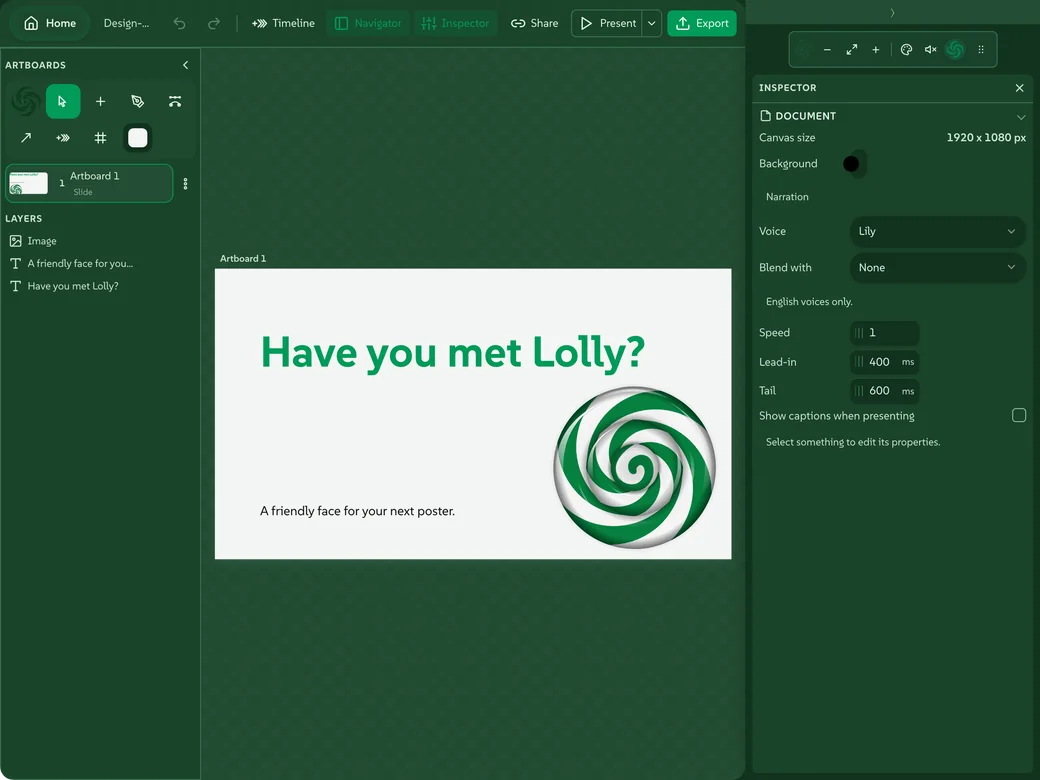
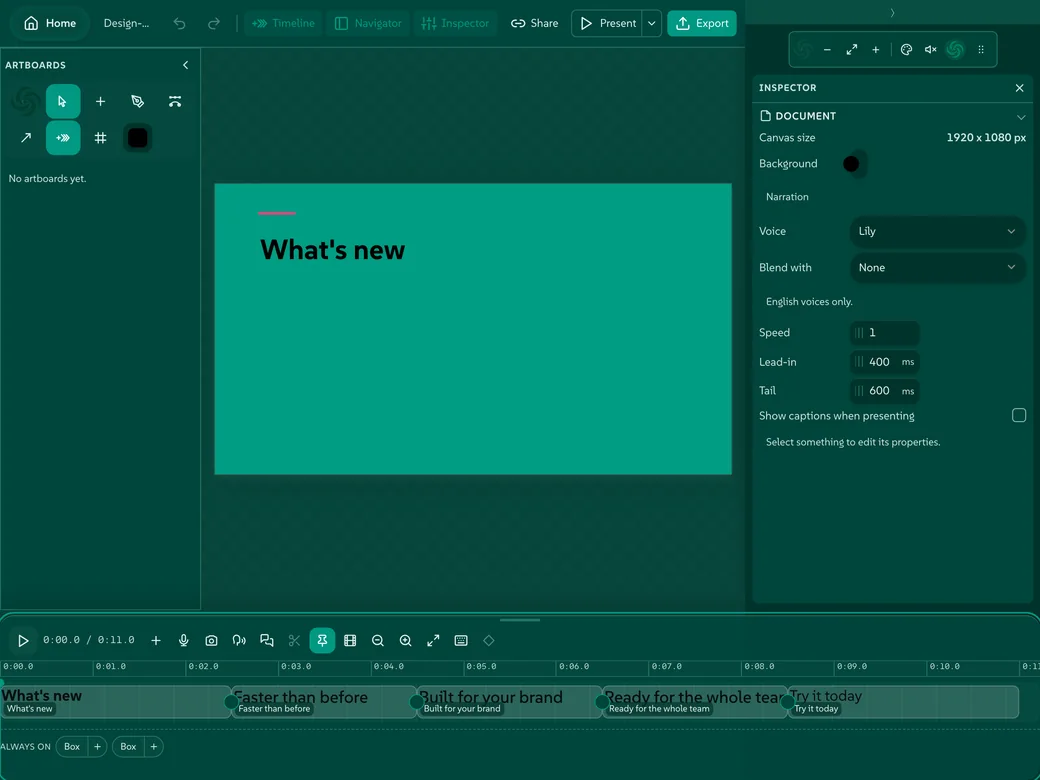
Some tools open as a direct-manipulation canvas - drag, rotate and snap boxes of text, shapes and images, exported through the same deterministic path.

Tools inside tools

Treat a tool like an image inside another tool - a badge that renders its own QR code, a card with a live chart - and keep the smarts intact: still live, still re-rendered, never a flattened picture.

Tools work fine on their own.

To render to PNG, PDF, SVG, video, and more - use the Lolly platform.

Launch App ↗

Every format, in and out

Lolly reads 25 source formats and renders 27 - here's the full set, grouped by what each one is. Eleven  round-trip: read and written, so they appear in both columns.

Ingests25 in
3D
GLBglTF
Design
FigmaPenpotIllustratorInDesignPPTXPDFSVGLottie
Photos
HEICTIFFAVIF
Video
MP4WEBMMOV
Audio
MP3WAVOGGM4AFLACMIDIMOD
Data
CSVJSON
Exports27 out
Vector
SVGPDFCMYK PDFEPSEMFDXF
Raster
PNGJPGWEBPAVIFTIFFICO
Motion
MP4WEBMGIFAPNG
Audio
MP3M4A
Document
PPTXHTMLMDTXT
Data
CSVJSONICSVCF
Bundle
ZIP

Accessible, with sound

An interface that works the way you do - screen-reader friendly and fully keyboard-navigable throughout. Turn on gentle interface sounds, or switch to Neurospicy Mode: a calm focus beat that loops quietly while you work.

Organise, then render in bulk

Keep saved work in nested Projects folders. When it's time to ship, render a whole folder - or any handful you select - into a single zip. No spreadsheet, no batch grid required.

Provenance & privacy

Prove what you made.
Keep what's yours.

Every image, PDF, or video you export can carry a Content Credential - a tamper-evident C2PA seal created entirely on your device. It proves the file hasn't changed since it left Lolly, and once you enrol an identity, records who signed it. Rasters also carry the invisible Lolly Imprint in the pixels themselves, on by default, so a copy can still be recognised even after the credential is stripped.

  • Tamper-evident by defaultThe seal covers every exported byte. Change one pixel and any C2PA validator flags it.
  • Signed on your deviceYour signing key is generated locally and never leaves the device - not even Lolly can read it.
  • Verify anything, on-deviceThe Verify tab checks a file's credential, flags AI-generated content, reads the Lolly Imprint, and surfaces hidden data - offline, nothing uploaded.
Nothing leaves your device

No cloud rendering, no telemetry, no analytics. What you make stays on your machine.

Scrub and lock, on-device

Strip Hidden Data removes EXIF and metadata locally. Lock a PDF, a download, or a share link with a password that never leaves your device.

Self-host or air-gap

No server, no database, no backend. Run entirely behind your firewall, fully offline.

Bring what you've already made

Your design files aren't stranded

Finished work in Figma, Penpot, Illustrator, InDesign or any SVG app doesn't have to stay locked in one app. Open Layout Studio, click Import a design, and the file opens as a living layout - not a flattened picture. Every layer becomes an editable box, ready to keep working on, mix with tools, and render through the same rules.

Fig Figma .fig · SVG
Pen Penpot .penpot
Ai Illustrator .ai · PDF
Id InDesign .idml
SVG Any SVG universal
Your design file

Figma, Penpot, Illustrator, InDesign or any SVG

Editable canvas

Every layer a box you can retype, restyle and move

Mix in tools

Drop in a QR code, a live chart or another render

Render anywhere

SVG, PDF, PNG, video - reproducible from a URL

It stays editable

Text stays text, shapes stay shapes, images join your library. You keep working on the design - you never repaint a screenshot.

It arrives conformed

Fonts remap to your faces and every fill passes the same colour guard as a native box. A foreign artboard lands already governed.

It becomes a template

Save it and the layout is a reusable, URL-addressable tool - one anyone with Lolly can open, refill and render. No design app required.

All of it,
as you are,
on anything

Run offline on your device, be always available hosted online, you decide.
Lolly Tools can work there.

WebmacOSLinuxiOSAndroidCLITUI

Three modes of delivery:

Option 1

Deploy

Ship to devices through your existing MDM. Runs fully offline, behind any firewall or air-gap - nothing leaves the device.

Option 2

Serve

One hosted instance, used in any browser. Nothing to install - approved updates reach everyone the instant they ship.

Option 3

Hybrid

Offline local apps plus an always-current web version, sharing one tool library - across every OS at once.

Building & brand new

By design, we have no idea who or what runs Lolly - and that's exactly the point.

Founded by SUSE

Developed in-house at SUSE

Made for us

We are a coalition of passionate designers, developers, marketers, and IT operations experts. Manual work, expensive ugly software, and anything that slows us down day to day is the only adversary.

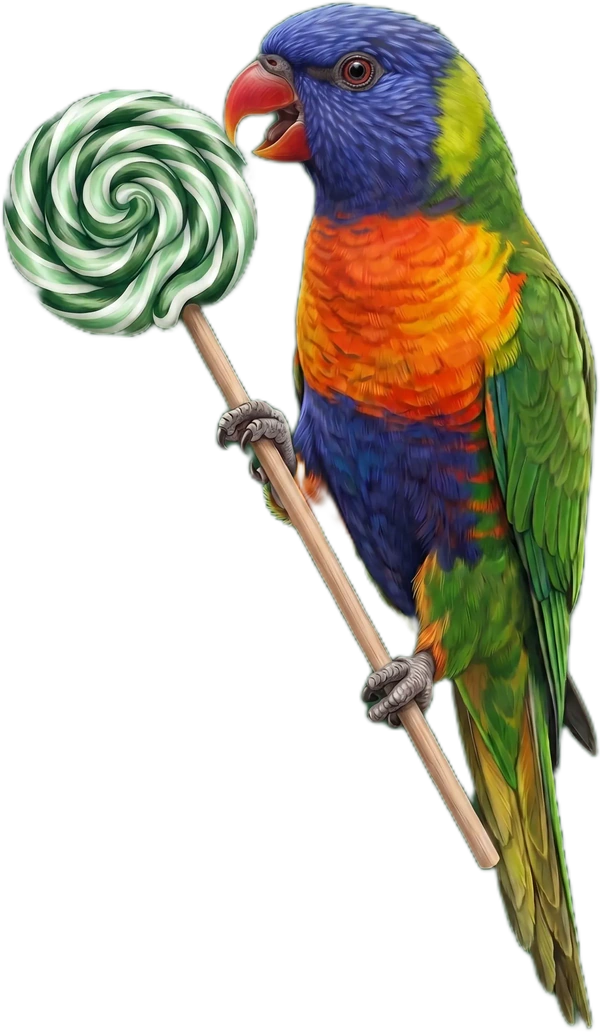
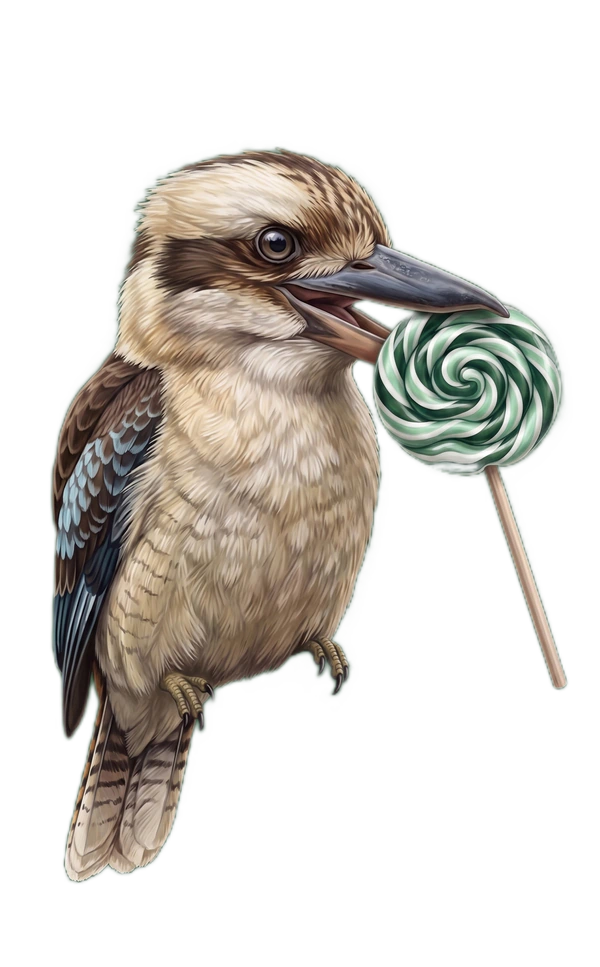
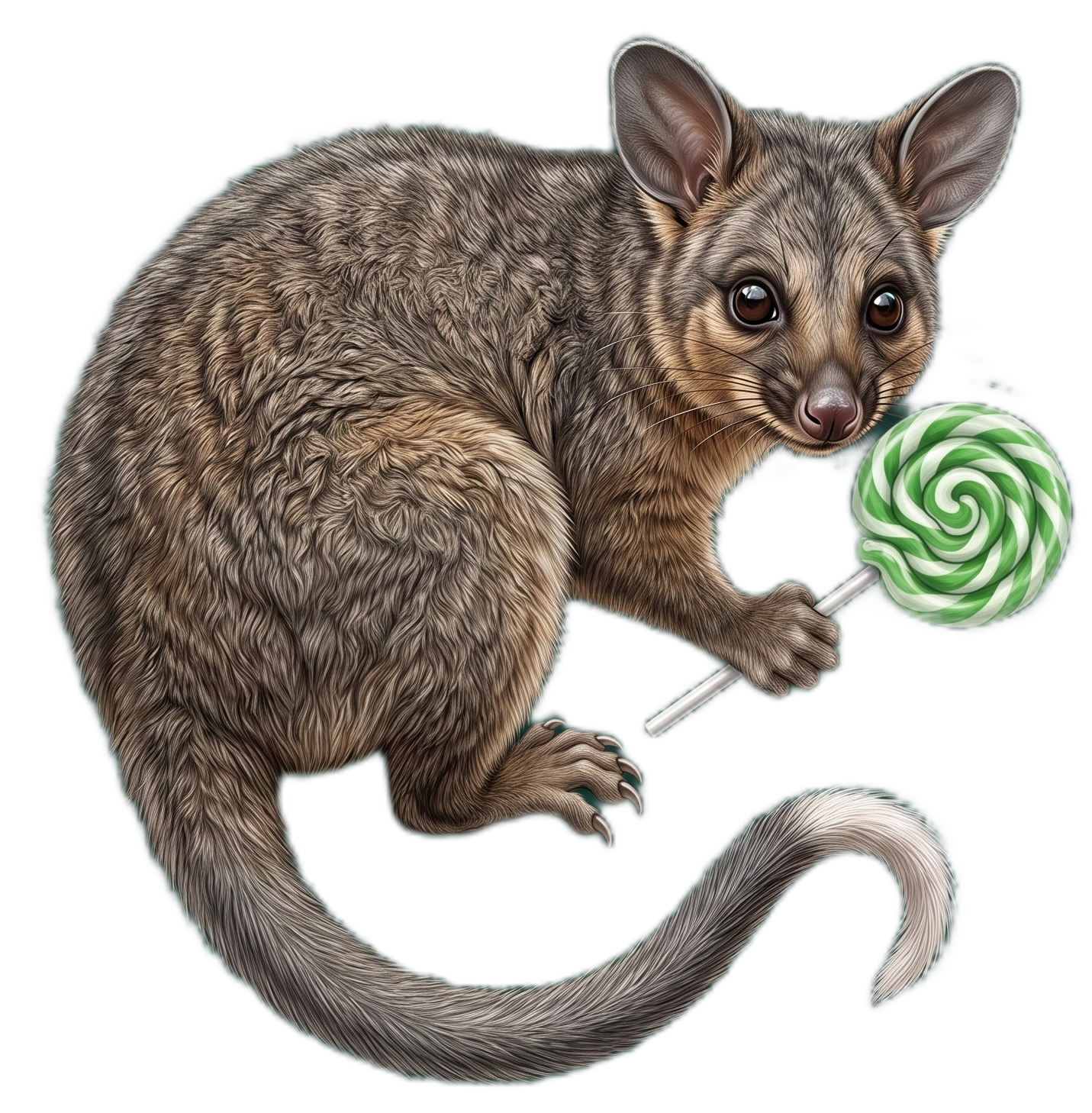
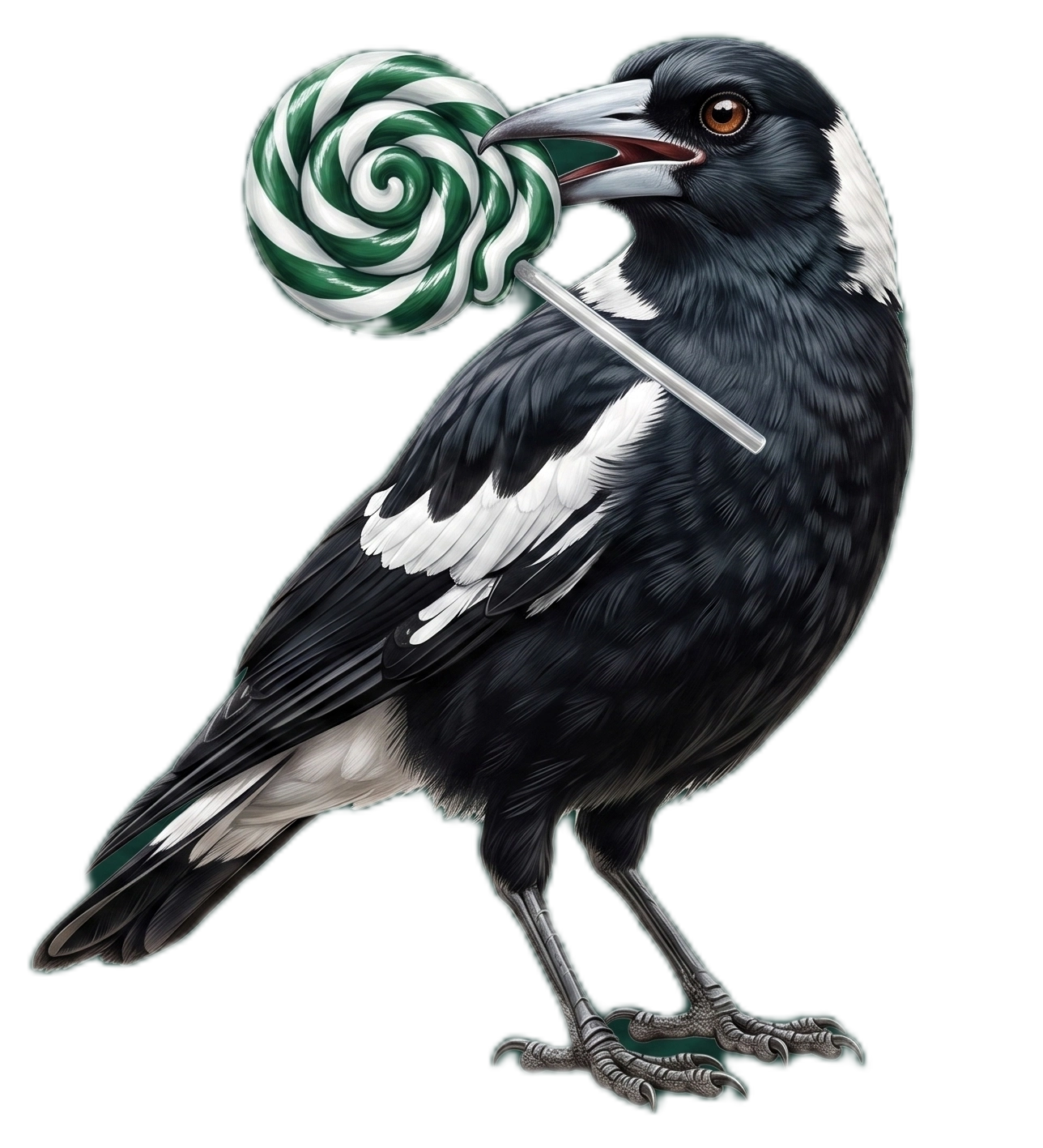
What's with the Quoll, Quokka, and Koala?

They're adorable Australian animals who cause no harm to their environment. In a world of predators looking for your data, money, or time - give them none and thrive.

Quoll-tea. Koala-ty. Quo'lity. We are obsessed with quality. Studio-quality media. When evaluating tools and platform improvements we ask: Is it good enough to make everything?

Why open source?

The more the platform is used, the more we improve the core engine - and the more time, money, and frustration we collectively save. Open source means anyone can build, audit, improve, and deploy Lolly. That's a better deal for everyone.

Questions & answers

The things people ask most.

What happens when I opt-in on the /profile page?

When you first use Lolly, everything you type anywhere is fully private until you deliberately want that information out there via media or a share link (if online).

With the opt-in selected, we embed some of your profile information as provenance into assets and bundles to identify you as the source.

Lolly produces a large volume of content. We take a strict data minimization approach to prevent risk.

What are the feature flags?

Feature flags turn parts of Lolly on or off. Usually an administrator controls these - with Lolly, you are in control.

Every feature flag is a switch you own, sitting in your own profile rather than an administrator's console

How do I get the mobile or desktop apps?

Anybody can distribute their own apps, the tools and configuration of those apps should vary widely depending on what audience it's intended for. So there's no one app unless you made it or someone relevant gives it to you.

Why the name "Lolly Tools"?

Lolly Because freedom is sweet. Tools are inactive when not being used. Not spying on you, running secret programs, Put it to work, your orders, actions, and terms.

Lolly is an Australian, New Zealand, British term for 'sweets' or 'candy'. Just like lollies, tools are very tasty for people needing them.

We're also laughing at the time and bills we are saving with this approach.

What hurdles could I expect adopting Lolly?

Lolly slots in wherever you already generate files - the CLI is the same engine as the App, so a pipeline run at 2am can't drift from what a person previews in a browser. The friction to adoption is rarely technical; it's organisational. Expect these:

A curated brand catalog has to be authored. Lolly is a platform, not a finished pack of your templates. For a governed rollout, someone defines the shared asset catalog (logos, palettes, fonts as permanent IDs) and writes the manifest + template for each output type. Individuals don't have to wait for that, though - in the open app anyone can ingest their own files into the catalogue and build tools in Layout Studio from day one.

Governance-by-git is optional - and unfamiliar to non-engineers. If you run a shared, controlled catalog, "the PR review is the moderation" is elegant for engineers and unfamiliar to most brand and marketing teams. If the people who own brand decisions don't live in git, you'll want a workflow that bridges them - or IT quietly becomes the strategic design partner and wider institutional gatekeeper (preferred by many in long-running production environments). Teams that don't want this simply skip it.

It's deliberately narrow - frame it that way. Lolly is not for bespoke or hero content. It is your personal DAM - hydrated and supercharged by your design system, tools and catalog - and it does have an open canvas (Layout Studio), but even there colours, type and assets conform to the active design globals, so free arrangement stays inside the system. Judged against Figma or Canva it will look limited. Judged as what it is - operationalised, recurring, massive-scale asset generation - nothing competes. The wrong framing is the most common set-back.

Change management on the producing side. Existing processes work today, even if the output is off-brand. Re-pointing them at the engine means re-testing re-learning, and "we can already makes files" becomes the excuse not to migrate. Start by converting one high-visibility production quality output and showing the before/after side by side.

Lolly lifts everything up.

What makes utilities different from tools?

Basic Answer → Utilities dont alawys need to render and therefore can get a different UX.

Real Answer → The reason utilities are hostable inside Lolly Tools is to add yet-another 'convenience layer' of defence to disincentivise data-exfiltration.

Why? Because it is known that every day, people take confidential content they already have and hand it to a random website to perform one small mechanical operation:

  • "Compress this PDF" → uploads a contract / payslip / board deck to unknown entities.
  • "convert HEIC to JPG" → uploads personal photos (with GPS EXIF) to an ad-funded host
  • "crop / resize this image" → uploads a product screenshot or unreleased asset
  • "format this JSON" / "decode this JWT" → pastes API responses, tokens, secrets into a formatter
  • "merge these PDFs" → uploads two documents that should never share a server

These sites and their massive clone long-tail are not trustworthy by default with unknown retention, unknown jurisdictions, unknown subprocessors, and an ad/affiliate business model that has every incentive to keep what you give them. The operation is trivial; the content is the cost.

We win the war for governance with excellent conveinece and service.

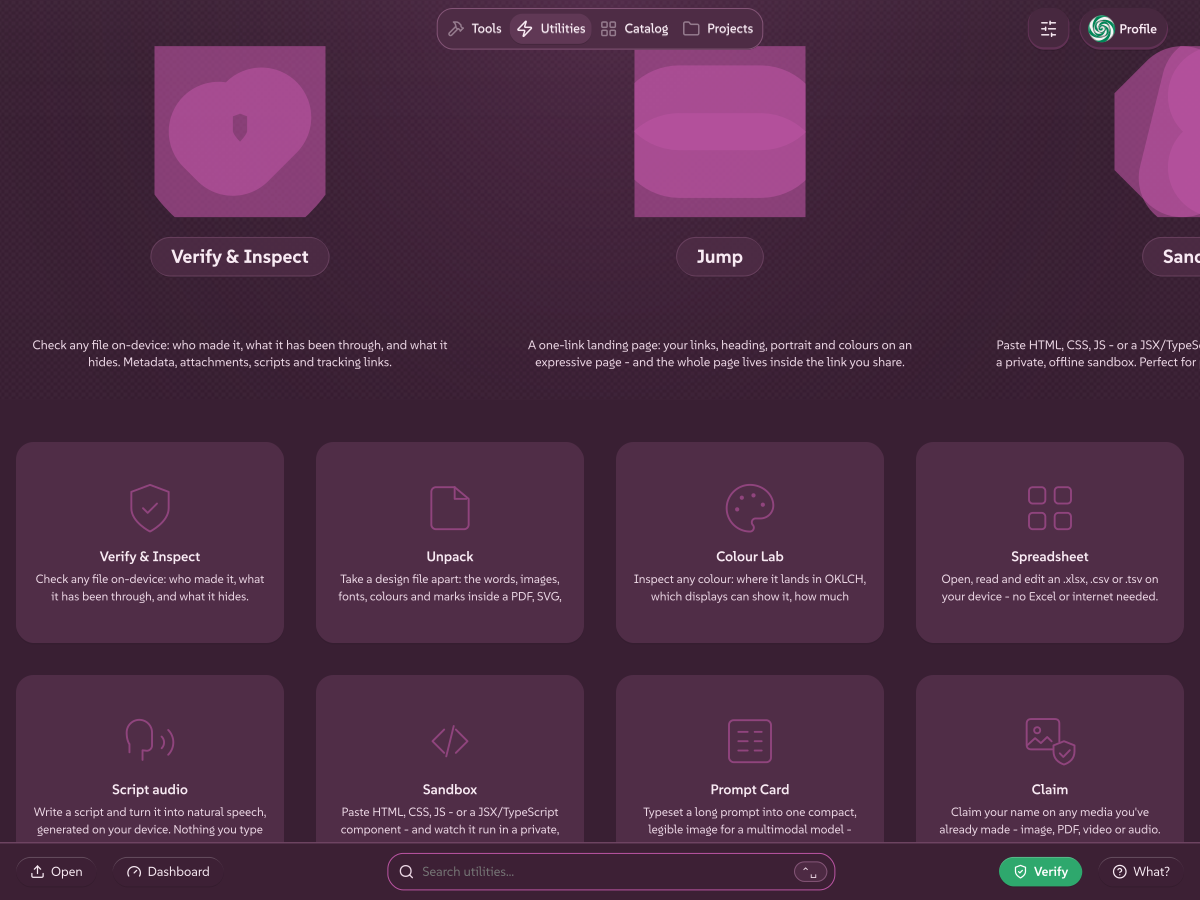
The Utilities view collects the mechanical jobs people usually hand to a random website, all running on your own device

Can Lolly edit and render my Figma, Penpot, Illustrator or InDesign files?

Yes. Open Layout Studio and click Import a design: it accepts a native Figma .fig (Save local copy), a Penpot .penpot export, an Illustrator .ai or .pdf, an InDesign .idml (File → Export → InDesign Markup), or any SVG (the wide door - almost any design app exports it). Everything is parsed entirely on your device, no account or plugin needed.

Layout Studio's open canvas, where Import a design sits in the toolbar

Layers arrive as editable boxes on the open canvas: text stays retypable, shapes stay shapes, images join your on-device library, and type and colours conform to the brand globals. Save it and the layout becomes a reusable, URL-addressable template anyone with Lolly can refill - and you can mix in live tools (a QR code, a chart) that re-render on load. From there it renders like anything else in Lolly - SVG, PDF, PNG and the rest, reproducible from its URL. See Import a design.

Can Lolly rebrand an existing PowerPoint deck?

Yes - two ways, both on your device. The Rebrand a Deck utility takes a .pptx and swaps its theme, hardcoded colours and fonts to your brand while charts, SmartArt and animations pass through untouched - you get a .pptx back. Or open the deck in Deck Builder (Load → drop the file) to edit it slide by slide as freeform objects, already snapped to brand, and export PPTX, PDF or video. Dropping a .pptx on an upload area instead files the slides you choose as SVG assets in your library. See Import a design → Decks and documents.

What happens on Aug 29?

The SUSE-branded tools leave the project, and new generic example tools defined by the user take over.

SUSE will operate its own Lolly to protect its trademarks.

How much is SUSE keeping private? (aka when is the rug-pull)

SUSE's trademarks and branded tools are for demonstration only, until August 29. You can find an unbranded instance of Lolly at lolly.ART.

SUSE is an enterprise open source infrastructure company with more than three decades of platform leadership. Its products include enterprise-tier Linux, Cloud Native, Edge, and AI infrastructure solutions.

From SUSE's perspective, this is about walking the talk on sovereignty and security. As of today, the likelihood SUSE productizes Lolly is near absolute zero.

Full disclosure: SUSE is building out internal tooling to integrate Lolly within its IT systems - that's about SUSE's internal set-up, not public vs. private development.

Speaking of the public side, Lolly aims to be built through Open Build Service, with secure supply-chain artifacts delivered by the SUSE Application Collection.

We'll build as much as we can in the open - you just won't see SUSE-branded tools for long, nor SUSE's internal workforce and commercial processes, which are unrelated to Lolly.